Wholesale Kitchen Cabinets Chicago: Contractor Sourcing Guide for the Chicagoland Trade Market

Wholesale kitchen cabinets in Chicago give contractors, builders, and dealers in the Chicagoland trade market direct access to factory pricing, fast 3–5 day delivery, and all-wood cabinet construction at margins big-box retailers cannot match. As of 2026, sourcing from a trade-only distributor with a local Chicago showroom is no longer just a cost-saving move — it is the most reliable hedge against Section 232 tariff exposure, volatile lead times, and the project-killing surprises that come from buying through retail channels. This sourcing guide walks Chicago contractors through pricing tiers, brand selection, lead-time benchmarks, multi-family logistics, dealer programs, and the criteria that separate a dependable wholesale partner from a generic supplier.
Key Takeaways for Chicago Contractors
- Wholesale kitchen cabinets in Chicago typically deliver 30–50% savings versus retail and big-box channels — and bulk-tier discounts can push that toward 50%+ on multi-family bids.
- A 25% Section 232 tariff has been in effect on imported cabinets since October 2026; American-made wholesale cabinet lines are the cleanest way to insulate Chicago project budgets.
- Standard lead times across the Chicagoland trade market run 3–5 business days for in-stock RTA, 4–6 weeks for semi-custom, and 8–12 weeks for fully custom — choose your supplier by which tier you bid most.
- A 10×10 kitchen benchmark in wholesale cabinet pricing ranges roughly $1,200–$4,400 for RTA and $5,500–$12,000 for semi-custom, depending on door style, finish, and box construction.
- Plywood box construction, dovetail drawer joinery, soft-close hinges, and full-extension undermount glides should be standard — not upgrades — at the wholesale tier.
- KCMA-certified cabinets and CARB Phase 2 compliance are non-negotiable for Chicago projects targeting LEED credits or building-code-driven inspections.
- A Chicagoland wholesale partner with a physical showroom near O’Hare (Elk Grove Village) gives contractors same-day pickup, sample inspection, and 3D kitchen design in one stop.
- A formal dealer program with tiered volume discounts, dedicated account management, and net payment terms is the difference between a one-time purchase and a long-term margin engine.
1. Why Chicago Contractors Need Wholesale Cabinet Sourcing
Chicago is one of the most active construction markets in the country, with steady demand from rehab flippers in Cook County, custom-home builders along the North Shore, and large multi-family developers working across DuPage, Kane, Will, and Lake Counties. In a market with this much volume, contractor cabinet pricing in Chicago is the variable that most directly determines whether a kitchen bid wins or loses. Buying retail — even at a trade discount from a big-box store — leaves 25–40% of margin on the table that a competitor sourcing through a true wholesale channel will capture.
 The 2026 cost environment makes that gap even sharper. Construction input prices rose at an annualized 7.1% rate in early 2026 according to Associated Builders and Contractors data — driven largely by tariff-affected materials. Cabinet contractors in Chicagoland who locked in domestic wholesale pricing entered the year with bid stability that import-dependent competitors simply do not have.
Wholesale sourcing also solves Chicago’s logistics problem. When a kitchen rough-in passes inspection and the homeowner expects cabinets by Friday, the supplier’s pickup window matters more than the quoted price. A trade-only cabinet distributor in Chicago with in-stock inventory at a local warehouse can have 20 linear feet of base and wall cabinets staged for pickup in hours — not the 4–8 weeks that retail special-orders typically require.
Below is a practical comparison of how the same contractor’s bottom line shifts across the four most common sourcing channels in the Chicagoland market.
| Sourcing Channel | Typical Discount | Lead Time | Best Use Case |
| Big-box retail (with pro account) | 5–15% off MSRP | 2–6 weeks | Single-room cosmetic refresh |
| Online RTA marketplace | 20–35% off MSRP | 1–3 weeks (shipping risk) | Flippers, low-budget rehabs |
| Wholesale cabinet distributor (in-stock) | 30–50% off MSRP | 3–5 business days | Production builders, GCs, dealers |
| Wholesale + volume tier (50+ cabinets) | 40–55% off MSRP | 1–2 weeks (bulk allocation) | Multi-family, dealer resale |
The math is simple. On a $40,000 kitchen package, the difference between a 12% trade discount and a 45% wholesale discount is $13,200 of recoverable margin — enough to fund a second project’s labor or absorb a tariff swing without renegotiating the contract.
2. Understanding Wholesale Cabinet Pricing in the Chicagoland Trade Market
Wholesale cabinets in Chicagoland are typically priced on a linear-foot basis rather than per-cabinet. A standard 10×10 kitchen benchmark — roughly 20 linear feet of base and wall cabinets combined — is the industry shorthand for comparing apples-to-apples between suppliers. Chicago contractors should always ask for a 10×10 quote before committing to a brand.
Pricing breaks down into three quality tiers. RTA (Ready-to-Assemble) cabinets sit at the entry level — flat-packed, lower freight cost, fastest turnover. Stock semi-custom cabinets occupy the mid-tier, with limited size and finish modifications and 4–6 week lead times. Fully custom cabinets are built to exact specifications and routinely run 8–12 weeks. Chicagoland’s mix of older brick walk-ups, suburban new builds, and high-rise condo conversions means most contractors carry at least two of these tiers in active rotation.
Below is a 2026 pricing reference for the Chicago wholesale market, based on a 10×10 kitchen with standard door styles and finishes:
| Cabinet Tier | Price per Linear Foot | 10×10 Kitchen Total | Typical Lead Time |
| RTA (entry) | $60 – $130 | $1,200 – $2,600 | 3–10 business days |
| RTA (premium) | $130 – $220 | $2,600 – $4,400 | 1–2 weeks |
| Stock semi-custom | $220 – $400 | $4,400 – $8,000 | 4–6 weeks |
| Premium semi-custom | $400 – $600 | $8,000 – $12,000 | 5–8 weeks |
| Fully custom | $600 – $1,200+ | $12,000 – $25,000+ | 8–12 weeks |
The 10×10 benchmark is useful for first-pass comparisons, but real Chicago kitchens rarely match the textbook layout. Galley kitchens in Lakeview condos, U-shaped layouts in Naperville colonials, and large-island plans in Hinsdale custom builds all change the linear-foot count substantially. For a more detailed breakdown of how RTA pricing works across project types, see our RTA Cabinets Cost Guide 2026.
3. Imported vs. Domestic Cabinets — The True Cost for Chicago Builders
Roughly 60% of kitchen cabinets sold in the U.S. are imported, and since October 14, 2026 a 25% Section 232 tariff has been in effect on imported kitchen cabinets and bathroom vanities. The planned escalation to 50% was delayed on December 31, 2026 and is now scheduled for January 1, 2027 — but the current 25% duty is fully active and is being passed through to contractors as a real line-item cost.
 For Chicago contractors, the implications are concrete. A $3,000 wholesale stock cabinet package sourced from China or Vietnam now lands in the $3,750–$4,200 range after tariff and customs pass-through, before any supplier markup. On a 50-unit multi-family build, that is a six-figure swing — and a meaningful threat to thin development margins.
American-made wholesale cabinets in Chicago sidestep the tariff entirely. Domestic manufacturers like Kith Kitchens (Haleyville, Alabama) and Shiloh Cabinetry produce in U.S. facilities, which means their pricing has been markedly more stable through the tariff cycle. According to Construction Dive’s reporting on early-2026 input costs, domestic cabinet demand surged precisely because of this stability advantage. For the underlying tariff context, see Construction Dive’s January 2026 input-price analysis.
The table below illustrates how a typical 20-cabinet package shifts in landed cost depending on country of origin in 2026:
| Origin | Pre-Tariff Wholesale Cost | Section 232 Tariff | Landed Cost (2026) |
| Domestic (Alabama / Indiana) | $8,500 | 0% | $8,500 |
| Vietnam (RTA import) | $6,200 | 25% | $7,750 |
| China (subject to AD/CVD stack) | $5,400 | 25%–70%+ | $6,750 – $9,180 |
| Mexico / Canada (USMCA-compliant) | $7,800 | 0% (USMCA) | $7,800 |
The takeaway for Chicagoland contractors is not that imports are no longer viable — they still have a role on tight-budget rehabs — but that factory-direct cabinets in Chicagoland sourced from American manufacturers now compete on price and decisively win on lead time. Locking in domestic supply contracts in early 2026 is one of the most defensible bid-stability moves a builder can make ahead of the potential 2027 tariff increase.
4. Cabinet Lead Times in Chicagoland: Why 3–5 Day Delivery Matters
Cabinet lead time is the silent margin killer in residential and multi-family construction. Every day that cabinets sit unscheduled is a day of crew idle time, holding cost, and downstream trade delays. In Chicago, where harsh winters compress the productive build season into roughly nine months, lead-time discipline matters even more.
In-stock RTA inventory at a local Chicagoland warehouse should be available for 3–5 business day pickup or delivery — that is the operational standard a true wholesale distributor maintains. Semi-custom orders should land in 4–6 weeks. Anything longer reflects either a thinly stocked supplier or an overseas-only inventory model. Contractors planning on a 14-day finish-trim sequence cannot survive an 8-week supplier surprise.
The lead-time benchmarks below reflect what experienced Chicago contractors should hold their wholesale partner accountable to in 2026:
| Cabinet Type | Best-Case Lead Time | Typical Range | Red-Flag Threshold |
| In-stock RTA (local warehouse) | Same day pickup | 3–5 business days | 10+ business days |
| Semi-custom (size modifications) | 3 weeks | 4–6 weeks | 8+ weeks |
| Custom paint program | 3–4 weeks | 4–8 weeks | 10+ weeks |
| Fully custom build | 6 weeks | 8–12 weeks | 16+ weeks |
| Bulk multi-family allocation | 1–2 weeks | 2–4 weeks | 6+ weeks |
A Chicagoland warehouse with sufficient depth in the most-specified SKUs — Shaker white, Shaker grey, slim Shaker, and natural wood-tone door styles — is what makes 3-5 day delivery possible. Contractors evaluating a new supplier should ask three questions: (1) Where is your nearest stocking warehouse? (2) What percentage of your top 50 SKUs are in stock today? (3) What is your average ship-out time for an order placed before noon? Vague answers signal a thin distribution model. For NextDAY Cabinets’ Chicago delivery and pickup specifics, see the delivery information page.
5. How to Choose a Wholesale Cabinet Supplier in Chicago
Picking the right wholesale partner is the single highest-leverage operational decision a Chicago contractor will make in a calendar year. The supplier shapes lead time, cash flow, customer experience, and ultimately repeat business. The criteria below separate a Chicago cabinet supplier worth a long-term commitment from one that simply happens to have inventory.
Key Evaluation Criteria
- Trade-only positioning. A supplier that publicly serves homeowners is a competitor disguised as a partner. Look for explicit statements of contractor/dealer-only service.
- Local Chicagoland warehouse. Pickup access within a 30–45 minute drive of your job sites is non-negotiable for change orders and damage replacements.
- KCMA certification and CARB Phase 2 compliance on every product line carried.
- Transparent volume-discount tiers — published or quoted in writing, not negotiated case-by-case.
- Free or low-cost professional 3D kitchen design service. This shifts hours of layout work off the contractor’s plate.
- In-house dealer program with net-payment terms (Net 30 or better) for qualified accounts.
- Multiple American-made brand options — domestic supply is the tariff-stability hedge.
- Documented warranty policy, replacement policy, and return policy — published, not buried.
The table below maps the most common contractor pain points to the supplier feature that resolves them:
| Contractor Pain Point | What to Demand From a Supplier | Why It Matters |
| Surprise lead-time slips | Live in-stock inventory dashboard | Removes the “we’ll check” waiting period |
| Damaged-on-arrival cabinets | Local warehouse + replacement policy | Same-week swap vs. 4-week reorder |
| Margin compression on bids | Tiered volume discount in writing | Predictable bid math, no per-job negotiation |
| Designer time on small projects | Free 3D design service | Frees up principal billable hours |
| Cash flow on multi-family orders | Net-30 or Net-45 terms | Aligns AP cycle with draw schedule |
| Tariff exposure on imported SKUs | Multiple domestic brand lines | Insulation against 2027 escalation |
For a deeper, multi-tier framework on supplier selection, NextDAY’s ultimate wholesale cabinet supplier guide for 2026 walks through the complete due-diligence process most successful contractors run before signing a dealer agreement.
6. Cabinet Construction Quality — A Contractor’s Checklist
A wholesale cabinet’s quality is decided in five places: the box, the drawer, the door, the hardware, and the finish. Cutting cost in any of these areas eventually surfaces as a callback. In the Chicago market — where humidity swings from sub-15% in January heating season to near-70% in August — construction quality also has to hold up against real environmental stress. According to the Kitchen Cabinet Manufacturers Association (KCMA), certified cabinets meet documented performance standards for structural integrity, finish durability, and shelf-load capacity.
The minimum spec sheet below is what a serious wholesale partner should carry without upcharging:
| Component | Acceptable Wholesale Spec | Premium Spec (Worth the Upgrade) |
| Cabinet box | 1/2″ plywood sides, 1/4″ plywood back | 5/8″ or 3/4″ plywood, full plywood back |
| Drawer construction | Solid wood, dovetail joinery | Solid wood + dovetail + 5-piece bottom |
| Drawer glides | Soft-close, full-extension, undermount | Blum or Salice branded undermount |
| Hinges | 6-way adjustable, soft-close | Blum / Salice / Grass branded |
| Door construction | Solid wood frame, MDF or solid wood panel | All solid wood, mortise-and-tenon |
| Finish | Multi-stage catalyzed conversion varnish | UV-cured finish (lab-tested for moisture) |
| Certification | KCMA + CARB Phase 2 | ESP (Environmental Stewardship Program) |
For Chicago multi-family projects targeting LEED credits, the CARB Phase 2 certification on composite-wood components is mandatory documentation. The Environmental Stewardship Program (ESP) certification — issued by KCMA — adds an additional layer of sustainability documentation that is increasingly requested in green-building specs across the city. A wholesale partner who can produce both certs on demand is positioned to win more institutional and developer-driven work.
7. Cabinet Brands and Product Lines for Chicagoland Contractors
Brand selection drives both pricing positioning and customer perception. Most Chicago contractors carry three to five active brands across the price spectrum so they can bid competitively from rental rehabs to luxury custom builds. The brand-line table below summarizes the most relevant wholesale cabinet brands available through NextDAY Cabinets’ full cabinet catalog.
| Brand | Origin | Price Tier | Best Application |
| Kith Kitchens — KithOne | Alabama, USA | Entry / RTA | Rehab, rental upgrade, flips |
| Kith Kitchens — Standard | Alabama, USA | Premium semi-custom | Custom homes, kitchen remodels |
| Kith Kitchens — Eudora | Alabama, USA | Frameless / European | Modern condos, contemporary builds |
| Mouser Cabinetry (Kith) | Kentucky, USA | Ultra-premium custom | Luxury North Shore, Hinsdale |
| Shiloh Cabinetry | Indiana, USA | Premium semi-custom | High-end remodels, executive homes |
| Forevermark Cabinets | Imported | Mid-tier | Production builds, value-engineered jobs |
| Wolf Home Products | Pennsylvania, USA | Mid-tier semi-custom | Builder-grade, design-forward rehabs |
| Mantra Cabinets | Imported (RTA) | Entry RTA | Flippers, fast-turn rehabs |
| Waypoint Living Spaces | USA / partial import | Mid-premium | Showroom-driven dealer sales |
| Marsh Furniture | North Carolina, USA | Mid-premium | Stock semi-custom, builder programs |
For Chicagoland contractors who want maximum tariff insulation, leading with the Kith Kitchens family — including the entry-level KithOne, the semi-custom Standard line, the frameless Eudora collection, and the ultra-premium Mouser sub-brand — covers nearly every project budget without exposure to import duties. Shiloh Cabinetry adds a strong domestic option in the high-end semi-custom space, while Wolf Home Products and Marsh Furniture round out the mid-tier American-made roster.
Imported brands like Forevermark and Mantra still play a useful role in flipper and high-volume rehab work where price-per-unit is the primary specification. The trade-off is the 25% tariff exposure plus longer freight times — a known cost that Chicago flippers are typically willing to accept on lower-spec cabinet packages.
8. Multi-Family and Commercial Cabinet Sourcing in Chicago
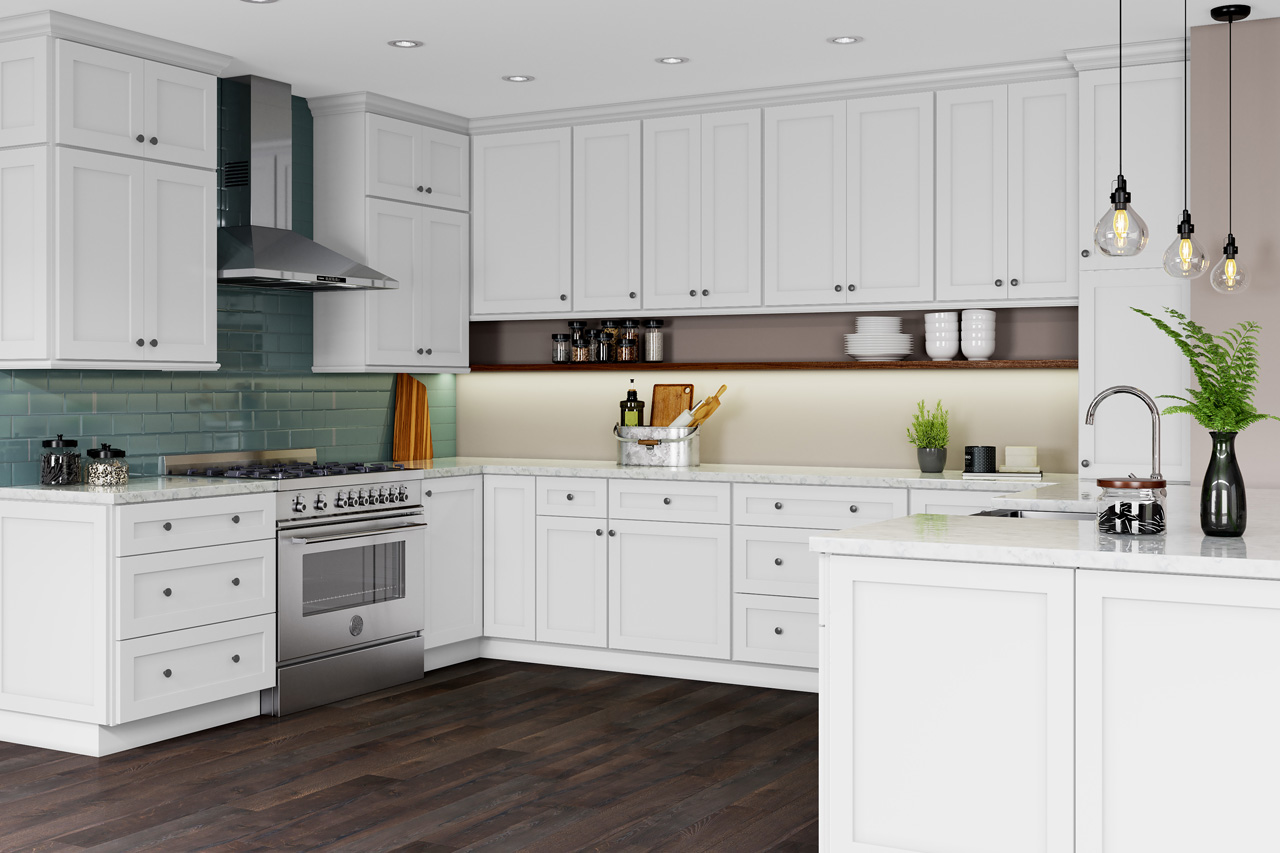
Chicago and the surrounding collar counties are in the middle of one of the most active multi-family construction cycles in the Midwest. Mid-rise rentals along the Blue Line, build-for-rent townhome clusters in Aurora and Naperville, senior-living developments in DuPage County, and student-housing renovations near Loyola, Northwestern, and the U of C are all competing for the same wholesale cabinet capacity. Multi-family cabinet sourcing in Chicago is therefore a discipline of its own.
The economics shift meaningfully at scale. A 50-unit garden apartment build typically requires somewhere between 800–1,200 cabinet boxes. At that volume, bulk kitchen cabinets in Chicago qualify for the deepest tier of volume discounting — often 45–50%+ off retail, with priority allocation, dedicated logistics scheduling, and direct factory-to-jobsite freight. NextDAY Cabinets’ commercial and multi-family projects program is specifically structured around these requirements.
The table below maps cabinet sourcing strategy to common Chicagoland multi-family project types:
| Project Type | Typical Cabinet Count | Recommended Tier | Procurement Strategy |
| Garden apt (50–100 units) | 800 – 1,800 | RTA + entry semi-custom | Bulk allocation, staged delivery |
| Mid-rise rental (100–250 units) | 1,800 – 4,500 | Mid-tier semi-custom | Direct factory contract, 60-day forecast |
| Build-for-rent townhomes | 4–8 cabinets per unit × 50–150 units | Stock semi-custom | Standard SKU lock, weekly draws |
| Senior living / assisted | Varies (ADA-compliant) | Custom-modified semi-custom | ADA-spec custom doors + standard boxes |
| Student housing rehab | 200 – 800 (per dorm) | RTA, white Shaker | Single-SKU efficiency, fastest lead |
| Hotel / hospitality | Varies (custom millwork) | Custom + commercial line | Drawing-set custom build |
Two operational principles separate successful multi-family cabinet procurement from the painful version. First: lock the SKU early. Cabinet specs that change after shop drawings are signed cause cascading delays through trim, countertop, and final inspection. Second: stage the delivery. Receiving 1,800 cabinets at once is a logistics nightmare. A wholesale partner with weekly-draw capability is worth meaningfully more than one quoting a small percentage cheaper but requiring a single bulk drop.
9. Dealer Programs and Volume Discount Tiers
Becoming a formal dealer with a wholesale cabinet distributor unlocks a different pricing curve than ad-hoc contractor purchases. A wholesale cabinet dealer program in Illinois typically rewards consistent volume with lower per-unit pricing, priority lead times, and structured payment terms. NextDAY Cabinets’ Become a Dealer program is structured around exactly this model.
The trade-offs are real. Dealer status often requires a minimum annual purchase commitment, a credit check, and proof of an active contractor or business license. In return, the dealer receives access to deeper discount tiers, dedicated account management, and — in many cases — a published net-payment term that materially improves cash flow on long-cycle projects.
| Dealer Tier (illustrative) | Annual Purchase Volume | Discount Off MSRP | Payment Terms |
| Standard Trade Account | Under $25,000 | 30–35% | Pre-pay or credit card |
| Bronze Dealer | $25,000 – $75,000 | 35–40% | Net 15 |
| Silver Dealer | $75,000 – $200,000 | 40–45% | Net 30 |
| Gold Dealer | $200,000 – $500,000 | 45–50% | Net 30 + priority allocation |
| Platinum Builder | $500,000+ | 50%+ + project-level pricing | Net 30 + dedicated rep |
The exact tier names and thresholds vary by distributor, but the structural pattern is universal across the Chicagoland market. The single most important consideration when stepping up a tier is honest forecasting. Over-committing to a volume tier and then under-purchasing can trigger retroactive price adjustments. Most successful Chicago dealers stair-step their commitment over 12–18 months as their actual project pipeline matures.
10. Chicago Service Area Coverage
A meaningful Chicagoland wholesale cabinet operation needs to cover more than just the city itself. Active project work in 2026 spans every collar county, and a contractor based in Cicero may be running jobs in Lake Forest, Schaumburg, and Aurora in the same week. The wholesale cabinets near Elk Grove Village geographic footprint — anchored by NextDAY Cabinets’ showroom at 1801 Estes Ave, Elk Grove Village, IL — is positioned to serve all of these markets within reasonable pickup or delivery range.
Below is a representative service-area summary by sub-market:
| Sub-Market | Counties Covered | Typical Drive Time to Elk Grove Village | Project Mix |
| Northwest Suburbs | Cook, Lake | 10–25 min | Single-family rehab, ADU, custom |
| West Suburbs | DuPage, Kane | 25–50 min | Production builders, multi-family |
| South Suburbs | Cook, Will | 40–60 min | Investor flips, rental rehab |
| Chicago city core | Cook | 20–45 min | Condo conversions, gut rehabs |
| North Shore | Cook, Lake | 25–55 min | High-end remodels, custom homes |
| Far West / Fox Valley | Kane, Kendall | 50–75 min | New construction, build-for-rent |
Chicago contractors operating outside the immediate metro — in Rockford, Bloomington, or southern Wisconsin — should ask any prospective wholesale partner specifically about freight pricing and delivery scheduling for their service radius. A reasonable wholesale partner will absorb some freight cost on larger orders rather than passing it through line-by-line.
11. NextDAY Cabinets Chicago Showroom (Elk Grove Village)
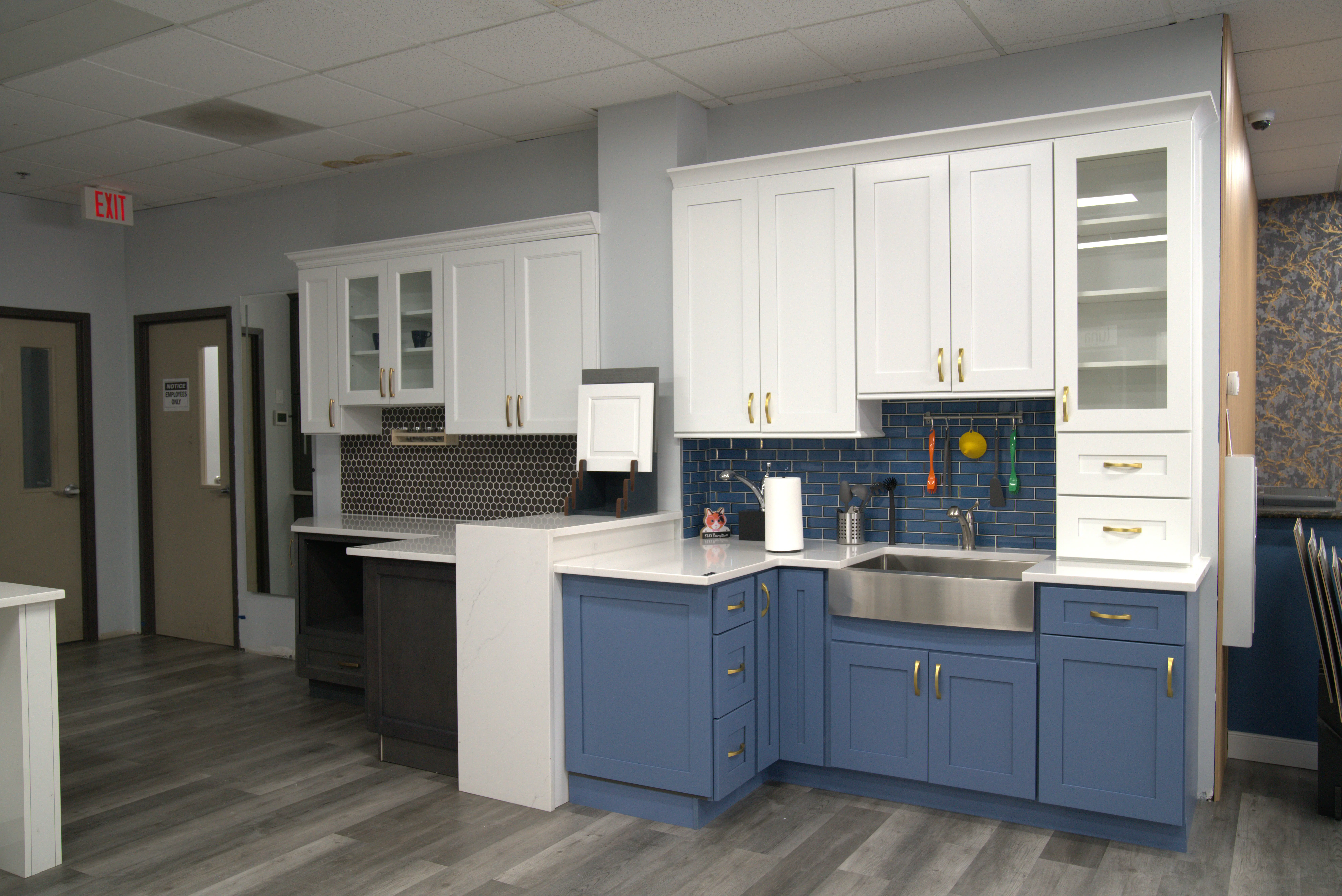
NextDAY Cabinets operates a Chicagoland showroom and warehouse at 1801 Estes Ave, Elk Grove Village, IL 60007 — minutes from O’Hare and within reach of the major expressways serving the Chicago metro. The showroom carries displays from the company’s full domestic and imported brand portfolio, and its in-stock warehouse supports the 3–5 day delivery standard the company is known for.
The Elk Grove Village location is staffed for trade-only service Monday through Friday from 8:00 AM to 5:00 PM, with Saturday hours from 10:00 AM to 2:00 PM. Walk-in pickups, scheduled delivery, professional 3D kitchen design, dealer onboarding, and bulk multi-family quoting are all handled on-site. Contractors and builders who want to evaluate door styles, finishes, and box construction in person can do so without an appointment during showroom hours. For full address and contact details, visit the NextDAY Cabinets Chicago showroom page, or explore our professional design services if you need design support on an upcoming Chicagoland project.
12. Frequently Asked Questions
Where do contractors buy wholesale kitchen cabinets in Chicago?
Chicagoland contractors typically source through trade-only wholesale distributors that operate physical showrooms and stocking warehouses in the metro area. Buying through a true wholesale channel — rather than a big-box retail trade-account program — produces 30–50% off MSRP, faster lead times, and more consistent inventory access. NextDAY Cabinets’ Elk Grove Village showroom is one example of this model serving the Chicagoland trade market.
How much do wholesale kitchen cabinets cost in Chicago?
Wholesale cabinet pricing in the Chicago market typically runs $60–$130 per linear foot for entry RTA, $220–$400 for stock semi-custom, and $400–$600 for premium semi-custom. A standard 10×10 kitchen — roughly 20 linear feet — therefore lands somewhere between $1,200 and $12,000 at wholesale, depending on tier, finish, door style, and brand.
How fast can I get wholesale cabinets delivered in Chicagoland?
In-stock RTA cabinets from a distributor with a local Chicago warehouse should be available for pickup or local delivery within 3–5 business days. Semi-custom orders typically take 4–6 weeks, and fully custom builds run 8–12 weeks. Anything significantly slower than these benchmarks usually points to a thinly stocked supplier or an overseas-only inventory model.
Are wholesale cabinets affected by 2026 tariffs?
Imported wholesale cabinets are subject to a 25% Section 232 tariff that has been in effect since October 14, 2026 and remains active throughout 2026. The planned escalation to 50% was delayed to January 1, 2027. Domestic American-made cabinet brands — including Kith Kitchens, Shiloh, Wolf, and Marsh — are not subject to this tariff and have therefore offered more stable pricing through the cycle.
Do general contractors get wholesale cabinet pricing in Illinois?
Yes. Most reputable wholesale cabinet distributors offer trade accounts to licensed general contractors, builders, and remodelers in Illinois. The standard requirement is proof of an active business or contractor’s license, an EIN, and either credit application approval or a pre-pay arrangement. Account-level discounts typically begin at 30% off MSRP and rise to 50%+ at higher volume tiers.
What brands of wholesale cabinets are available in Chicago?
The Chicagoland wholesale cabinet market carries both American-made and imported product lines. Common domestic brands include Kith Kitchens (KithOne, Standard, Eudora, Mouser), Shiloh Cabinetry, Wolf Home Products, Waypoint Living Spaces, and Marsh Furniture. Imported brands available in the market include Forevermark, Mantra, and various private-label RTA programs. Selection varies by distributor.
Is there a wholesale cabinet showroom near O’Hare Airport?
Yes. NextDAY Cabinets operates a wholesale showroom at 1801 Estes Ave, Elk Grove Village, IL 60007 — approximately 10 minutes from O’Hare International Airport. The showroom is open Monday through Friday from 8:00 AM to 5:00 PM and Saturday from 10:00 AM to 2:00 PM, and serves contractors, builders, and dealers across the greater Chicagoland trade market.
How do I open a wholesale cabinet account as a Chicago contractor?
Opening a wholesale cabinet account in Chicago typically requires submitting a trade-account application to the distributor. Standard documentation includes proof of an Illinois business license, federal EIN, evidence of active contractor or remodeler status (certificate of insurance, W-9, references), and either credit-application approval or pre-pay terms for initial orders. Most distributors process applications within a few business days, and many — including NextDAY Cabinets — handle onboarding directly through their dealer-program intake.
Source Smarter on Your Next Chicagoland Project
Every Chicago contractor’s bid wins or loses on three things: cost basis, lead time, and finish quality. A trade-only wholesale partner with a local Elk Grove Village warehouse, a domestic-heavy brand portfolio, and a structured dealer program addresses all three at once. Whether you are bidding a single kitchen remodel in Lakeview or staging a 200-unit multi-family project in Schaumburg, NextDAY Cabinets supplies the cabinets, the design support, and the logistics infrastructure that make those bids competitive. Visit the Chicago showroom or apply for a dealer account to lock in 2026 pricing on your next project.