
Choosing kitchen cabinets for a rental property requires a different approach than designing a kitchen for your own home. Landlords, property managers, builders, and remodeling contractors need cabinetry that balances durability, appearance, maintenance, and project costs.
The right kitchen cabinets can help create an attractive kitchen while supporting the practical demands of a rental property. Whether you are updating a single apartment or managing a multi-unit renovation, a thoughtful selection process can help you avoid unnecessary replacements and keep projects organized.
What to consider when choosing rental property cabinets
1. Prioritize Durability for Everyday Use
Rental kitchens can experience frequent use, especially when tenants change over time. Cabinet doors, drawer fronts, hinges, and shelves may be opened and closed hundreds of times, making durability an important consideration.
When comparing cabinet options, look beyond the exterior finish. Ask about cabinet box construction, drawer components, hinge quality, and the availability of replacement parts.
Consider how the kitchen will be used and select a cabinet line that matches the expected level of wear. A property intended for long-term tenants may have different requirements from a unit that experiences frequent turnover.
For contractors and property developers sourcing multiple kitchens, reviewing available kitchen cabinet lines from NextDAY Cabinets can help narrow down options for the project.
2.Choose Finishes That Are Easy to Maintain
Cabinet finishes influence both the appearance of a kitchen and the amount of maintenance it requires.
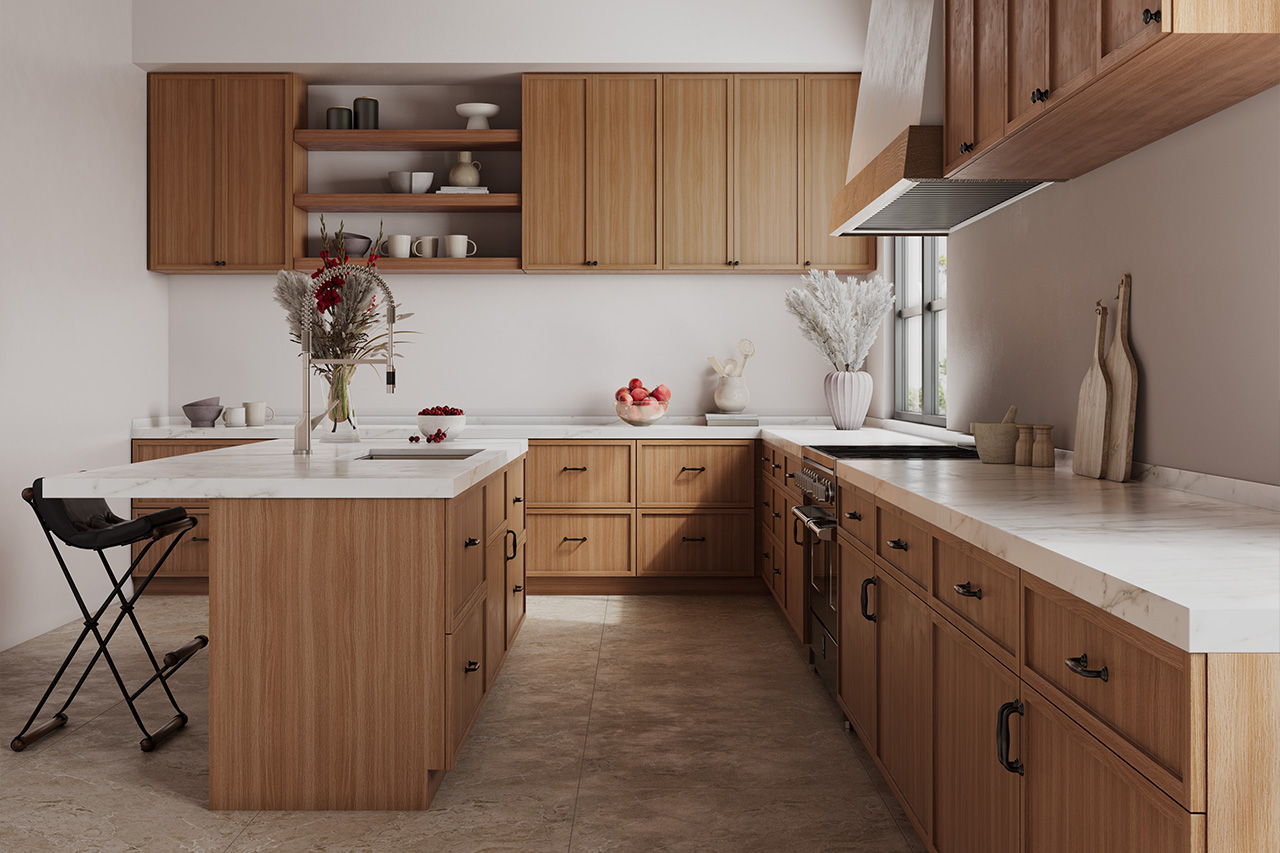
Neutral finishes can provide flexibility when coordinating countertops, flooring, backsplashes, and appliances. White, gray, natural wood tones, and other versatile colors can work well across different interior styles.
However, appearance should not be the only consideration. Ask the supplier how the finish should be cleaned, whether touch-up materials are available, and how replacement doors can be matched if damage occurs.
For rental properties, a practical finish is often more useful than a highly distinctive design that may be difficult to maintain or coordinate with future updates.
3.Balance Upfront Cost With Long-Term Value
The lowest initial cabinet price does not always produce the lowest overall project cost.
When comparing options, consider the purchase price alongside durability, maintenance requirements, replacement availability, and installation needs.
A less expensive cabinet may be suitable for a project with a limited budget, while a property with higher usage expectations may justify investing in a different construction or hardware option.
Contractors and property owners should also account for the number of kitchens being renovated. Buying for multiple units may require consistent product selections, coordinated orders, and careful budget planning.
NextDAY Cabinets is a wholesale distributor serving contractors, builders, dealers, and remodelers. Explore its wholesale cabinet solutions for trade professionals to learn about available cabinet options and project support.
4.Select a Practical Cabinet Layout
A well-planned layout helps tenants use the kitchen comfortably and can make the available space feel more functional.
Before choosing cabinets, review the kitchen dimensions, appliance locations, plumbing connections, door swings, and available walking space.
Consider how the cabinets will support everyday activities:
-
- Base cabinets for cookware and frequently used kitchen items
- Wall cabinets for dishes, glasses, and pantry essentials
- Drawer banks for utensils and smaller items
- Corner solutions where the kitchen layout requires them
- Suitable cabinet widths around appliances and work areas
A layout should be designed around the room rather than selected solely from a product catalog. Accurate measurements can help reduce ordering mistakes and avoid problems during installation.
For projects that require layout assistance, NextDAY Cabinets offers professional kitchen design services for trade customers.
5.Consider Ready-to-Assemble and Assembled Cabinets
The choice between ready-to-assemble (RTA) and assembled cabinets depends on the project’s budget, labor availability, schedule, and installation requirements.
RTA cabinets are supplied in components that are assembled before or during installation. They may suit contractors who have the labor and workspace to handle assembly.
Assembled cabinets arrive assembled, which can simplify certain aspects of job preparation. However, delivery arrangements, handling, storage, and site access still need to be considered.
Neither option is automatically best for every rental property. Compare the full requirements of the project, including labor, transportation, and installation coordination.
You can review the available cabinet products from NextDAY Cabinets and discuss the most appropriate configuration with the sales team.
6.Standardize Cabinet Selections Across Multiple Units
Property developers and contractors working on apartment buildings or several rental homes may benefit from standardizing cabinet selections.
Using consistent cabinet styles and finishes can simplify ordering, improve visual consistency, and make future maintenance easier. When the same cabinet line is used across multiple units, it may also be easier to identify the correct replacement components later.
Before standardizing, confirm that the selected products are available in the required sizes and configurations. Check whether the same finishes and components can be supplied for future phases of the project.
A standardized specification should still allow for differences in kitchen dimensions and layout. Record any variations clearly to avoid ordering identical cabinet configurations for rooms that are not identical.
7.Plan Ordering and Delivery Before Installation
Cabinet ordering should be coordinated with the wider renovation schedule. Delays can affect countertop templating, plumbing work, appliance installation, and the timing of the kitchen’s completion.
Before placing an order, confirm:
-
- Final cabinet measurements and layout approval
- Cabinet models, sizes, finishes, and quantities
- Required accessories, fillers, panels, and trim
- Product availability and confirmed lead times
- Pickup or job-site delivery arrangements
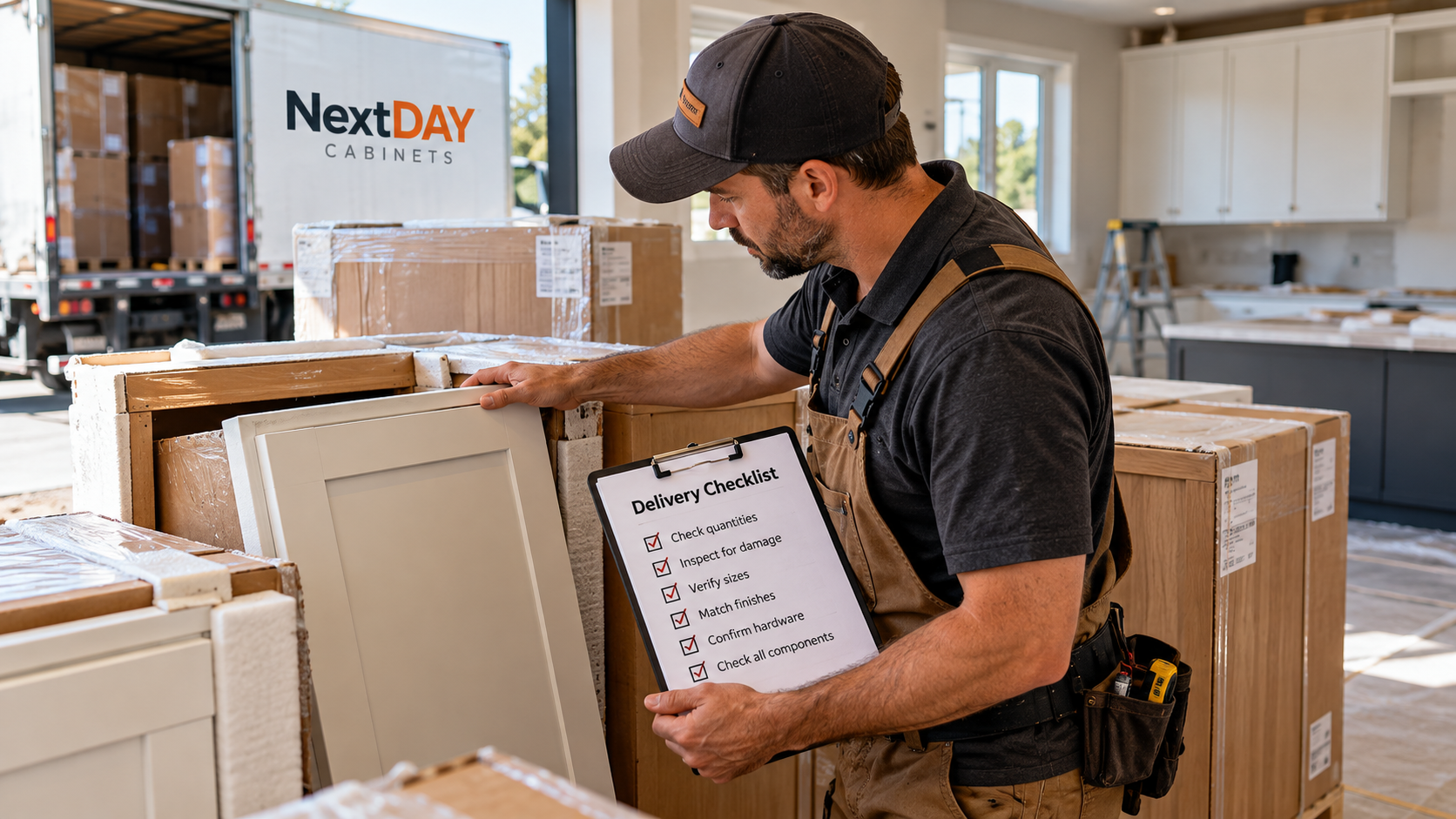
- Procedures for reporting damaged or missing items
Do not rely on a general delivery estimate when planning a specific project. Confirm the timing for the exact cabinet line, configuration, and order with the supplier.
NextDAY Cabinets provides pickup and delivery options through its showroom network. Visit the NextDAY Cabinets website to explore its services and contact the team about project requirements.
8.Think About Future Repairs and Replacements
Rental property owners should consider how easily a kitchen can be maintained after installation.
Ask whether replacement doors, drawer fronts, hinges, and other components can be ordered if an item is damaged. Keep records of the cabinet brand, product line, finish, and original order details.
These records can be particularly valuable when managing several rental units or planning renovations in stages.
Choosing a cabinet system with clearly documented specifications can make future maintenance more manageable and help reduce mismatches when replacement parts are needed.
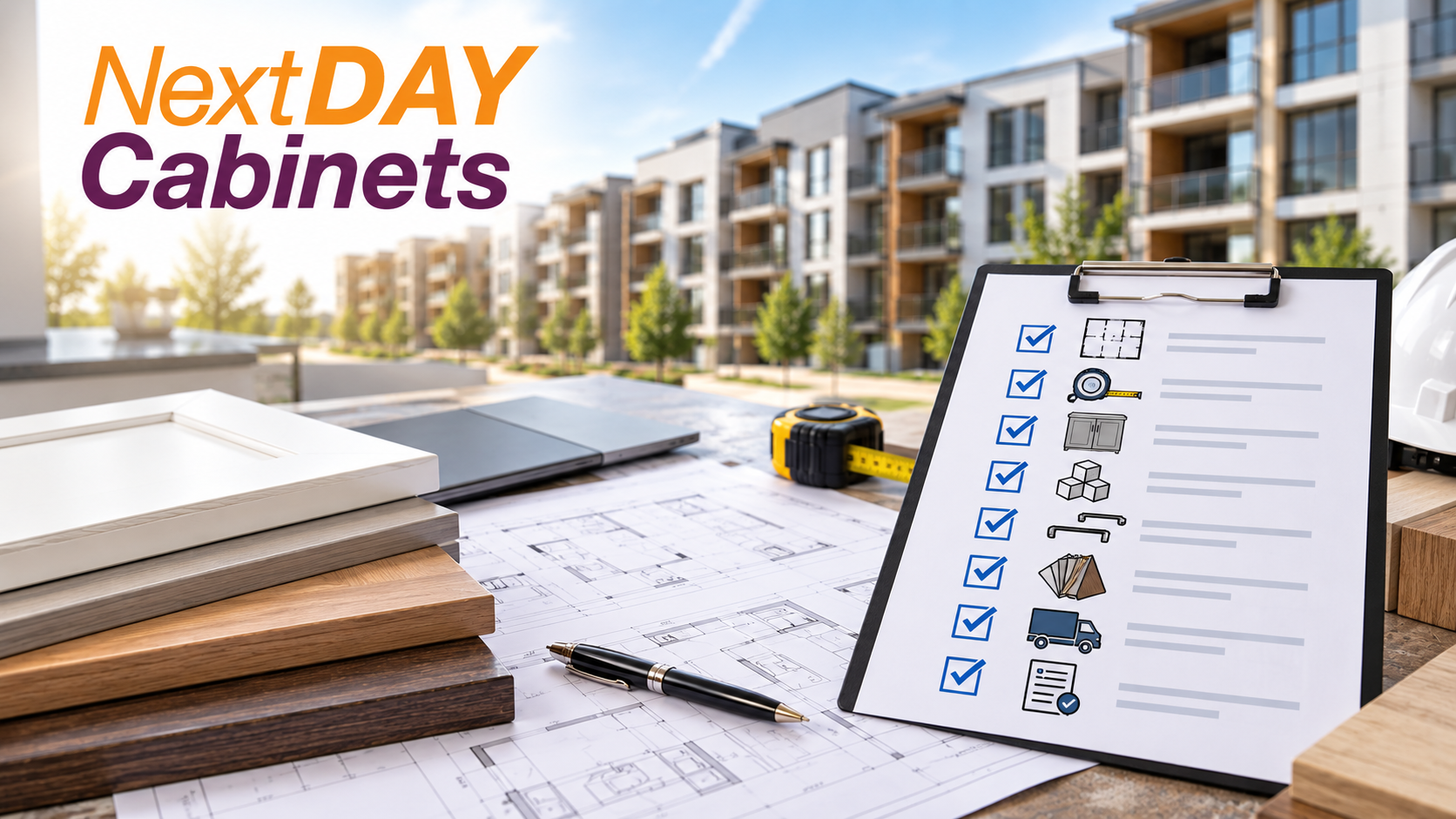
Kitchen Cabinet Selection Checklist for Rental Properties
Before finalizing your order, review the following:
-
- Have all kitchen dimensions been verified?
- Does the cabinet construction suit the expected use?
- Are the finish and hardware appropriate for the project?
- Have all cabinet sizes and quantities been checked?
- Are fillers, trim, panels, and accessories included?
- Have product availability and lead times been confirmed?
- Is delivery or pickup coordinated with the installation schedule?
- Are product and finish details documented for future repairs?
A consistent checklist can help contractors, landlords, and property managers reduce avoidable mistakes.
Find Kitchen Cabinets for Your Next Rental Property Project
Selecting kitchen cabinets for a rental property involves more than choosing a style. Durability, maintenance, budget, layout, availability, and future replacement needs all contribute to a successful result.
Start by defining the project’s requirements, comparing suitable cabinet lines, and confirming measurements before ordering. For multi-unit developments, standardizing selections and documenting specifications can make procurement and future maintenance easier.
NextDAY Cabinets supplies kitchen cabinets and related products to contractors, builders, remodelers, and dealers.
Explore NextDAY Cabinets’ wholesale cabinet solutions to review available options and discuss your next project with the team.
You can contact us to discuss your kitchen cabinets needs, ask questions, and get the information you’re looking for.
Frequently Asked Questions
1. What are the best kitchen cabinets for a rental property?
The best kitchen cabinets for a rental property combine durability, easy maintenance, practical storage, and affordability. Choose materials and finishes that can withstand frequent use while complementing the property’s overall design.
2. Which cabinet materials are most durable for rental properties?
Plywood and quality engineered wood products can be suitable options, depending on their construction and finish. Compare material specifications, moisture resistance, hardware quality, and manufacturer recommendations before making a decision.
3. Are shaker cabinets a good choice for rental kitchens?
Yes. Shaker-style cabinets offer a simple, versatile design that works with many kitchen styles. Their straightforward appearance can also make it easier to update the kitchen’s look with new hardware or complementary finishes.
4. What cabinet colors work best in rental properties?
White, light gray, and natural wood tones are versatile choices that complement a wide range of countertops, flooring, and wall colors. The best option depends on the property’s style, lighting, and target renters.
5. How can landlords reduce kitchen cabinet maintenance costs?
Choose durable finishes, quality hinges and drawer slides, and cabinet designs that are easy to clean. Regular inspections and prompt repairs can also help prevent minor issues from becoming more expensive problems.
6. Should rental property owners choose stock or custom kitchen cabinets?
Stock cabinets can be a practical option when standard sizes fit the kitchen and budget is a priority. Custom cabinets may be worth considering when the layout requires specific dimensions, specialized storage, or a more tailored design.
7. What should property managers consider when ordering kitchen cabinets for multiple rental units?
Property managers should evaluate dimensions, material consistency, finish availability, lead times, replacement options, and total project costs. Standardizing cabinet styles and finishes across units can simplify future maintenance and replacement.