
Kitchen cabinet color trends move slower than most people expect. A backsplash can be swapped in a weekend, but cabinet color is a ten to twenty year commitment, which is why the colors gaining ground in 2026 are warmer and quieter than the ones that dominated a decade ago.
The shift is away from cool grays and stark whites, and toward colors with some warmth in them. Below is what is actually selling, what each color works with, and how to pick one you will still like in 2035.
What is driving kitchen cabinet color trends in 2026
Three things are pushing the current palette.
Open floor plans changed the math. When the kitchen is visible from the living room, cabinet color functions as wall color for half the house. Cool grays that looked crisp in a closed kitchen read as cold across a great room.
Lighting changed too. Most kitchens now run LED under-cabinet strips and recessed cans in the 2700K to 3000K range, which the Department of Energy classifies as warm white. Warm light on a cool gray cabinet turns it slightly purple. That same light on a greige or off-white cabinet just looks like daylight.
And people are keeping kitchens longer. Homeowners who remodeled in 2014 are still living with those cabinets. That experience made buyers cautious about anything that reads as a specific year.
The most popular kitchen cabinet colors right now
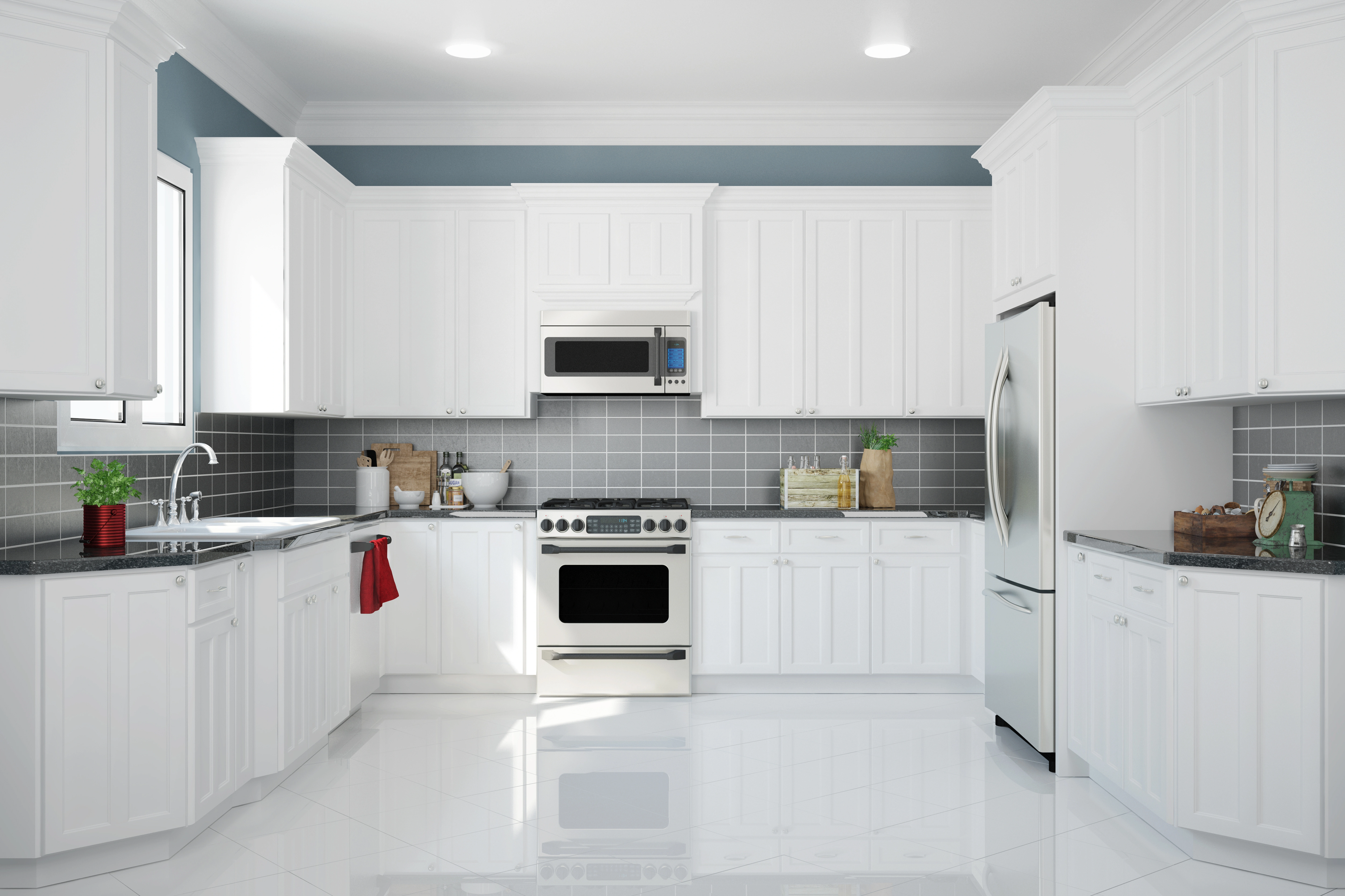
Warm whites and off-whites
White cabinets are not going anywhere. What changed is the temperature. Bright, blue-based whites have given way to whites with a drop of yellow or gray in them.
Shiloh Cabinetry lists Shoji White as one of its 2026 trend colors, and it is a good example of the category: soft, slightly warm, and forgiving under both daylight and LED. Kith Kitchens offers Alabaster in the same family, alongside a true Bright White for anyone who still wants the crisper version.
Warm white works because it does not compete. If you have wood floors, a patterned backsplash, or a stone countertop with movement in it, an off-white perimeter lets those materials carry the room.
The tradeoff is maintenance. Any light cabinet shows fingerprints near the sink and grease near the range. Painted finishes clean up easily, but you will be wiping.
Sheen matters almost as much as the color itself. Matte and low-sheen finishes have become the default pairing with warm white and greige, since they hide the fingerprints and water spots that a higher-gloss finish makes obvious. Satin remains the practical middle ground for anyone who wants an easy-to-wipe surface without the flatness of true matte.
If none of the standard whites are quite right, custom cabinet paint can match an existing trim or wall color instead of settling for the closest standard shade.
Sage and muted greens
Green has become the default answer for people who want color without commitment. Sage in particular sits close enough to neutral that it behaves like a warm gray in most rooms.
It pairs well with brushed nickel and brass, which have overtaken chrome as the go-to hardware finish this year, and it looks better against stainless appliances than most people expect. Shiloh’s Rookwood Shutter Green covers the deeper end of the range for anyone who wants more saturation. You can see how the color reads across a full kitchen in our look at GoldenHome sage green cabinets.
One caution: green is the color most sensitive to lighting. A sage that looks calm in the showroom can turn gray under cool bulbs or slightly yellow under warm ones. Order a sample door and look at it in your own kitchen at night before committing.
Warm neutrals: greige, mushroom, and taupe
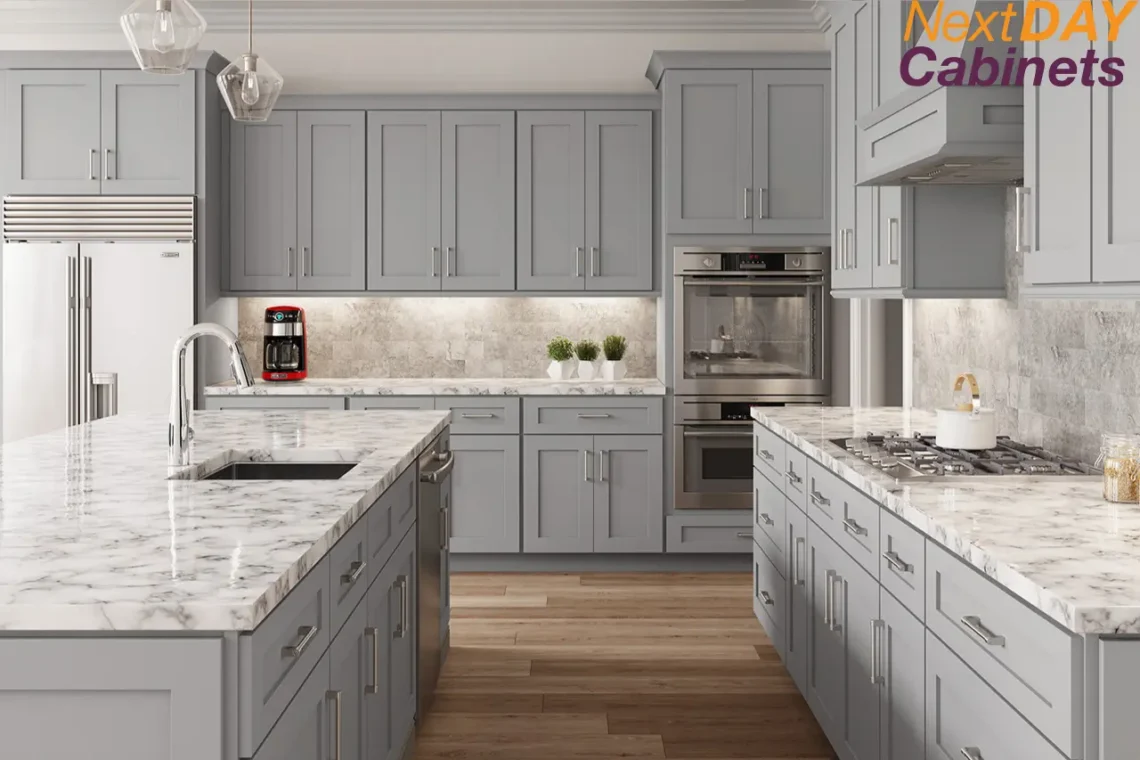
This is one of the fastest-growing categories we’re seeing come through our showrooms, and it’s the least talked about online. Mushroom, greige, and soft taupe give you the practicality of a mid-tone cabinet without the coldness of the grays that were everywhere in 2015.
 Shiloh’s Quietude falls here, a soft gray-green that shifts depending on what surrounds it. These colors hide wear better than white and read less heavy than charcoal, which makes them a sensible choice for a busy family kitchen.
They also solve a common problem: what to do when the countertop has both warm and cool tones in it. A mid-tone neutral cabinet bridges the two.
Natural wood tones
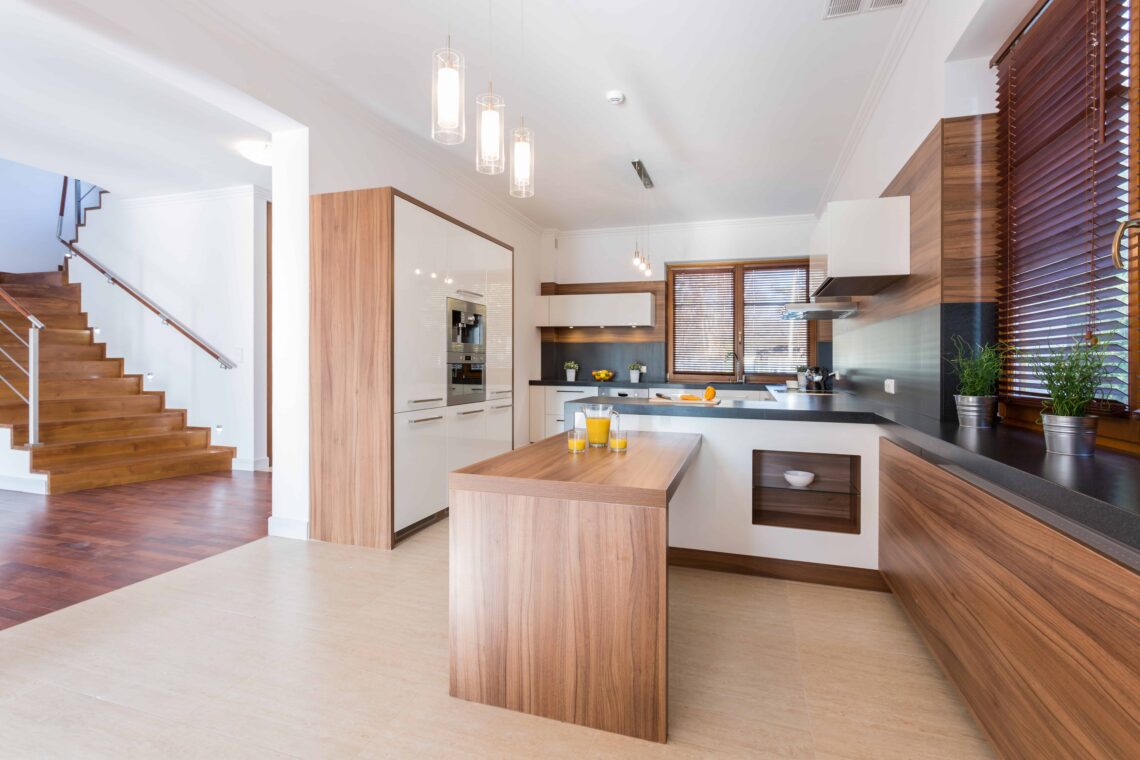
Stained wood is back, and not as a rustic look. Rift-cut and quarter-sawn white oak, walnut, and lighter maple stains are showing up in kitchens that are otherwise very modern.
Wood grain does something paint cannot: it adds texture without adding a pattern. In a kitchen with flat slab doors and minimal hardware, a wood grain perimeter or island is often the only thing keeping the room from feeling clinical.
Shiloh’s stain and finish range covers nine wood species, which gives you room to match an existing floor or piece of furniture rather than settling for something close.
Charcoal, black, and deep blues
Dark cabinets have settled into a specific role. Very few people are doing an entire kitchen in black. What works is a dark island against a lighter perimeter, or dark lowers under white uppers.
Kith Kitchens lists Charcoal and Iron among its popular paints. Shiloh carries Naval and Black at the dark end of its lineup. Navy remains the most requested blue, and the softer, grayer blues have picked up as well.
If you are considering dark cabinets, look at the room’s natural light first. Dark paint absorbs light, and in a north-facing kitchen with one window, an all-dark scheme can close the room in.
Comparing the main color families
| Color family | Works best in | Pairs well with | Practical note |
| Warm white, off-white | Any kitchen, especially smaller ones | Wood floors, patterned tile, stone with movement | Shows marks near sink and range |
| Sage, muted green | Kitchens with good natural light | Brass, brushed nickel, white oak | Color shifts noticeably under different bulbs |
| Greige, mushroom, taupe | Busy family kitchens | Both warm and cool countertops | Hides wear better than white |
| Natural wood stain | Modern kitchens with flat doors | Matte black hardware, quartz | Grain varies between doors, which is normal |
| Charcoal, black, navy | Islands, lower cabinets, larger rooms | Warm metals, light countertops | Needs strong natural or added light |
Using two colors instead of one
Splitting the kitchen between two colors has moved from trend to standard practice. The usual approach is a lighter perimeter with a darker island, or white uppers over a wood or painted base.
It works for a practical reason as well as an aesthetic one. Lower cabinets take the abuse in a kitchen, so putting the darker color down low means scuffs and shoe marks are less visible. We cover the layouts that hold up in our guide to two-tone kitchen cabinets.
Two rules keep two-tone kitchens from looking accidental. Keep the door style the same on both colors, and repeat one of the two colors somewhere else in the room, whether that is a hood, a pantry door, or open shelving.
How to choose a color you will still like in ten years
A few things separate the choices people are happy with from the ones they regret.
- Look at samples in your own kitchen, at three different times of day. Showroom lighting is designed to flatter.
- Decide the countertop first if you can. Stone has fixed undertones, and paint does not.
- Match the cabinet color’s warmth to your floor. A cool cabinet over a warm oak floor is the most common mismatch we see.
- Give the color somewhere to breathe. If every surface in the room is the same value, the kitchen flattens out.
- Treat hardware as a separate decision, and make it after the color is settled.
 If a color feels slightly boring on the sample door, that is often a good sign. Cabinet color is a background, and backgrounds that call attention to themselves get tiring.
The fastest way to know if a color works is to see it in your own kitchen. Request a free sample door before you commit to a full order. It costs very little and settles the question in a way no showroom or photo can.
When the color you want is not in the standard lineup
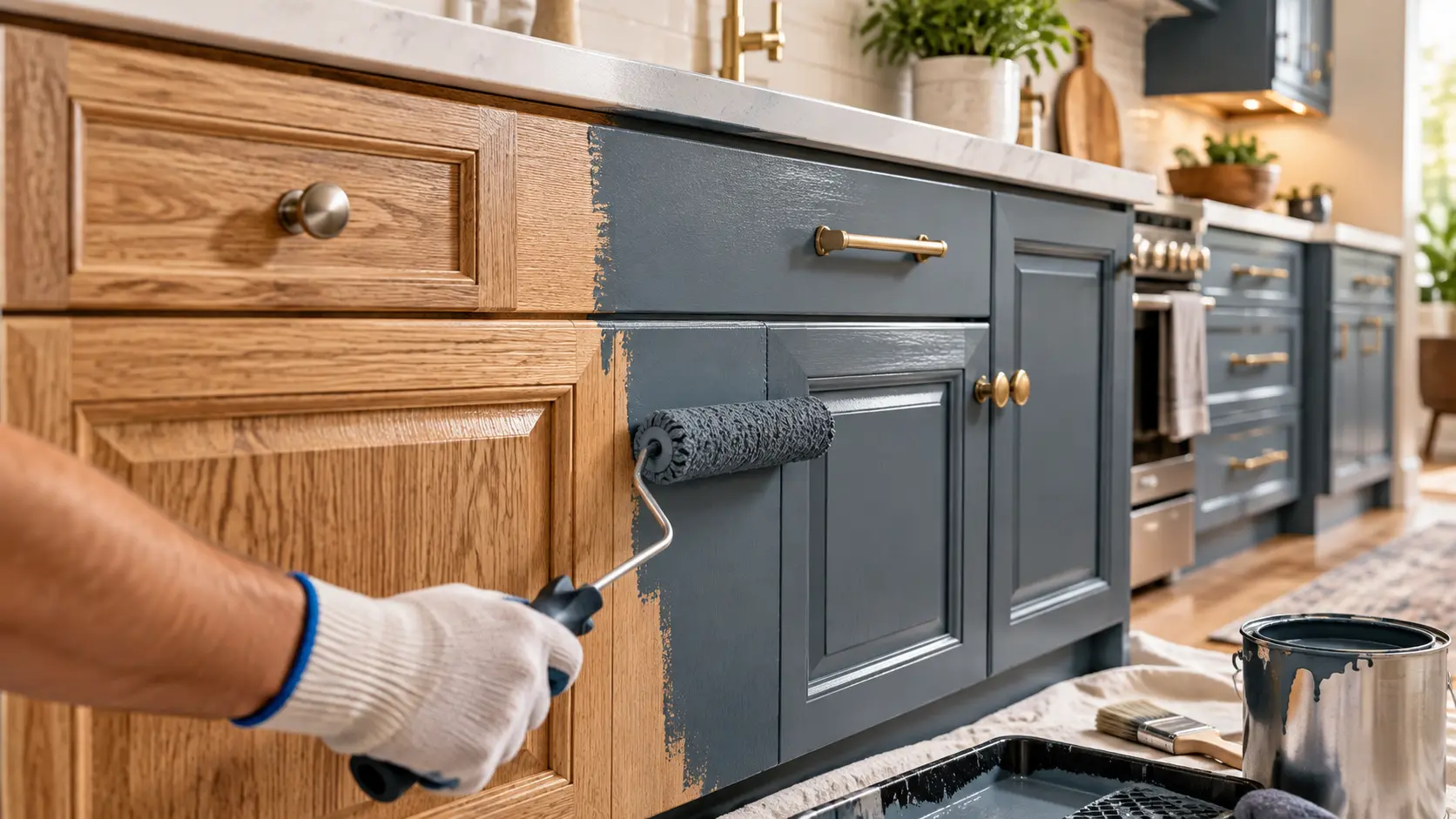
Standard color lineups cover most projects, but not all of them. If you are matching an existing built-in, working to a designer’s spec, or simply want a shade that no manufacturer stocks, custom paint is the route.
Our custom cabinet paint colors program covers any shade in the Sherwin-Williams collection. Custom-painted cabinets come in Shaker, full overlay with a recessed panel, and we guarantee the finish will match the sample door you order beforehand. Those cabinets carry a two-year limited warranty against manufacturing defects under normal residential use.
Ordering a sample door first is worth the wait. It costs very little and it is the only reliable way to see a color in your own light.
Frequently asked questions
What is the most popular kitchen cabinet color for 2026?
Warm white remains the most requested, followed closely by sage green and warm neutrals like greige and mushroom. The clearest shift we’re seeing is that cool gray has lost ground to colors with warmer undertones.
Are white kitchen cabinets going out of style?
No. White cabinets have held the top spot for over a decade and show no sign of dropping. What has changed is the shade. Bright, blue-based whites now look dated next to softer, warmer whites.
What cabinet color makes a small kitchen look bigger?
Light colors with warm undertones. Off-white and pale greige reflect light without the coldness of a stark white. Keeping uppers and lowers the same color also helps, since a single color reads as one continuous surface.
Should upper and lower cabinets be different colors?
It works well when the darker color goes on the bottom. That keeps the room feeling grounded rather than top-heavy, and it hides scuffs where they actually happen. Keep the door style consistent across both.
Do painted cabinets show wear faster than stained wood?
Painted finishes show chips more visibly, particularly on edges and around handles. Stained wood hides minor damage better because the grain breaks up the surface. Both hold up well with normal care, and painted doors can be touched up.
How much does it cost to repaint or refinish kitchen cabinets?
It depends on the number of cabinets, the door style, and whether you’re refinishing existing doors or ordering new ones, so costs vary a lot from kitchen to kitchen. Our professional design services team can walk through your kitchen and give you a specific quote rather than a generic estimate.
Can I order a cabinet color that is not on the standard chart?
Yes. Our custom paint program covers the full Sherwin-Williams range, offered in Shaker doors with a full overlay. Order a sample door first to confirm the color in your own lighting.
Putting kitchen cabinet color trends to work in your kitchen
The colors gaining ground in 2026 have one thing in common: they are warmer and less assertive than what came before. Warm whites, sage, greige, and natural wood all work as backgrounds rather than statements, which is why they tend to age well.
Ready to see these colors in your own kitchen? Order a free sample door, or visit one of our showrooms in Chantilly, Alexandria, Woodbridge, Richmond, Beltsville, and Elk Grove Village to compare finishes side by side. You can also browse the full range at nextdaycabinets.com/products.
Working on a client’s kitchen? Our professional design services team can map any of these colors onto a full layout before you order.