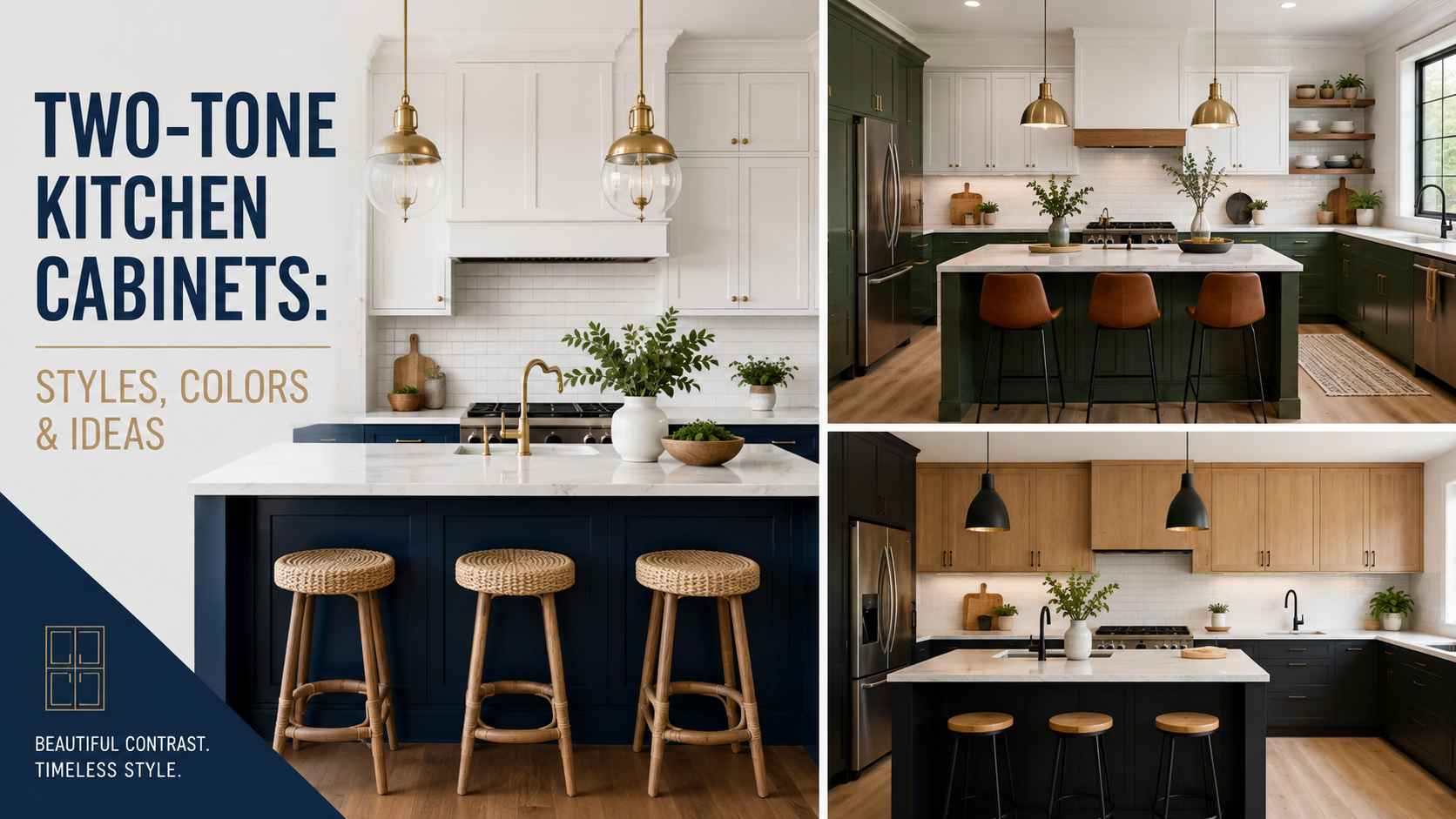

Two-tone kitchen cabinets are one of the most versatile ways to give a kitchen more depth, contrast, and personality without making the space feel overly complicated. Instead of using the same finish throughout the kitchen, homeowners can combine two cabinet colors, finishes, or materials to create visual separation between upper and lower cabinets, a kitchen island, or different functional areas.
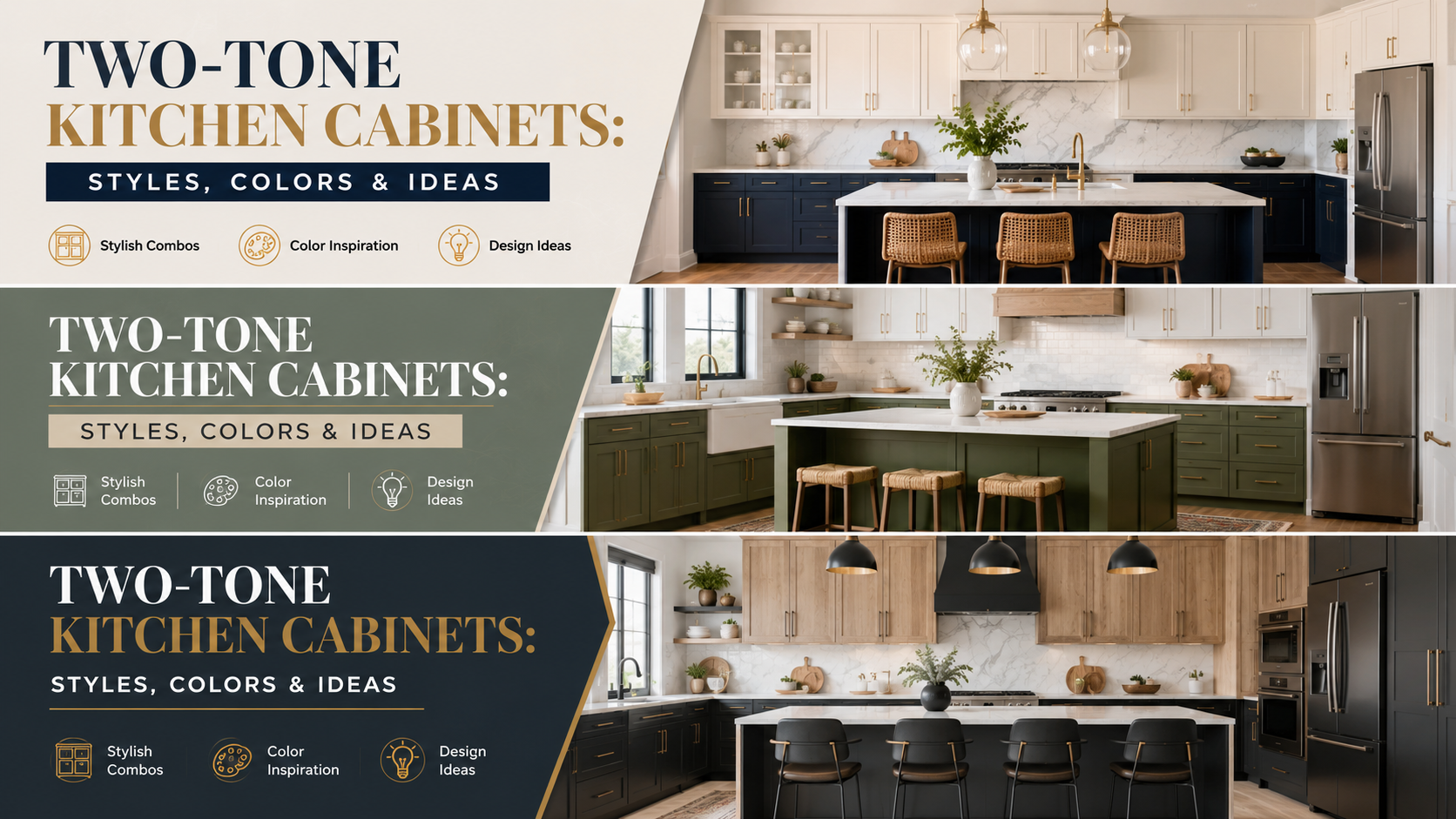
The most popular approach is pairing light upper cabinets with darker lower cabinets or using a contrasting island as the focal point. White and navy, cream and charcoal, natural wood and black, and soft gray with deeper accent colors are especially adaptable combinations. The right choice depends on your kitchen size, natural light, countertops, flooring, cabinet style, and the overall look you want to achieve.
If you’re shopping for cabinetry, NextDAY Cabinets offers a wide selection of kitchen cabinets, cabinet colors, finishes, and styles. Its kitchen cabinet collection includes options from established cabinet brands and provides solutions for contractors, builders, dealers, and homeowners planning a kitchen project.
What Are Two-Tone Kitchen Cabinets?
Two-tone kitchen cabinets use two distinct cabinet colors, finishes, or materials within the same kitchen design. The two tones can be divided between upper and lower cabinets, perimeter cabinets and an island, or different sections of the kitchen.
For example, you could install white upper cabinets with navy lower cabinets. Another option is to use warm wood cabinetry throughout the perimeter and introduce a painted island in a contrasting color.
Two-tone cabinetry doesn’t necessarily mean using two completely different colors. A subtle design can combine two shades from the same color family, such as warm white and cream, light gray and charcoal, or natural oak and a darker wood finish.
This flexibility makes two-tone cabinets suitable for modern, transitional, farmhouse, traditional, and contemporary kitchens.
Why Are Two-Tone Kitchen Cabinets So Popular?
The appeal of two-tone cabinetry comes from its ability to balance aesthetics and functionality.
A single cabinet color can create a clean, consistent appearance, but using two finishes gives you more opportunities to introduce contrast and define important areas of the kitchen.
Two-tone designs can:
- Create a visual focal point
- Add depth to an otherwise simple kitchen
- Help distinguish the island from perimeter cabinetry
- Make large kitchens feel more visually balanced
- Keep smaller kitchens from feeling visually heavy
- Introduce bold colors without covering the entire kitchen in them
- Combine painted cabinetry with natural wood
- Give a standard cabinet layout a more customized appearance
Current kitchen design trends continue to emphasize warm neutrals, natural wood, deeper blues, greens, and carefully selected accent colors. NextDAY Cabinets’ guide to 2026 kitchen cabinet color trends also highlights two-tone combinations as a practical way to incorporate color while maintaining a cohesive kitchen design.
What Is the Best Rule for Two-Tone Kitchen Cabinets?
There is no single rule that every kitchen must follow, but one of the safest approaches is to establish a clear visual hierarchy.
In many kitchens, this means using:
Light or neutral upper cabinets + darker lower cabinets or island
This arrangement works because lighter upper cabinets can keep the upper portion of the room visually open, while darker base cabinets provide contrast and grounding.
Another important principle is consistency. If you use two colors, they should relate to something else in the room. For example, your darker cabinet color might coordinate with the island countertop, pendant lights, backsplash details, flooring, or hardware.
Using the same cabinet door style in both colors is another effective way to make the combination feel intentional rather than mismatched.
What Are the Best Two-Tone Cabinet Color Combinations?
Choosing two cabinet colors is often the most difficult part of the design process. The best combination depends on your home’s architecture and the fixed elements already present in the kitchen.
Here are several combinations worth considering:
| Cabinet Combination | Overall Look | Best For |
|---|---|---|
| White + Navy | Classic and sophisticated | Traditional, coastal, transitional |
| White + Natural Wood | Warm and timeless | Modern farmhouse, transitional |
| Cream + Charcoal | Soft but dramatic | Transitional, contemporary |
| White + Sage Green | Fresh and natural | Farmhouse, modern |
| Warm Wood + Matte Black | Bold and contemporary | Modern, industrial |
| Light Gray + Dark Gray | Subtle and sophisticated | Minimalist, contemporary |
| Cream + Deep Green | Warm and organic | Traditional, transitional |
| White + Black | High contrast | Modern, contemporary |
The key isn’t simply choosing two attractive colors. The colors should work with your countertops, flooring, backsplash, walls, appliances, and lighting.
Is White and Navy a Good Two-Tone Kitchen Combination?
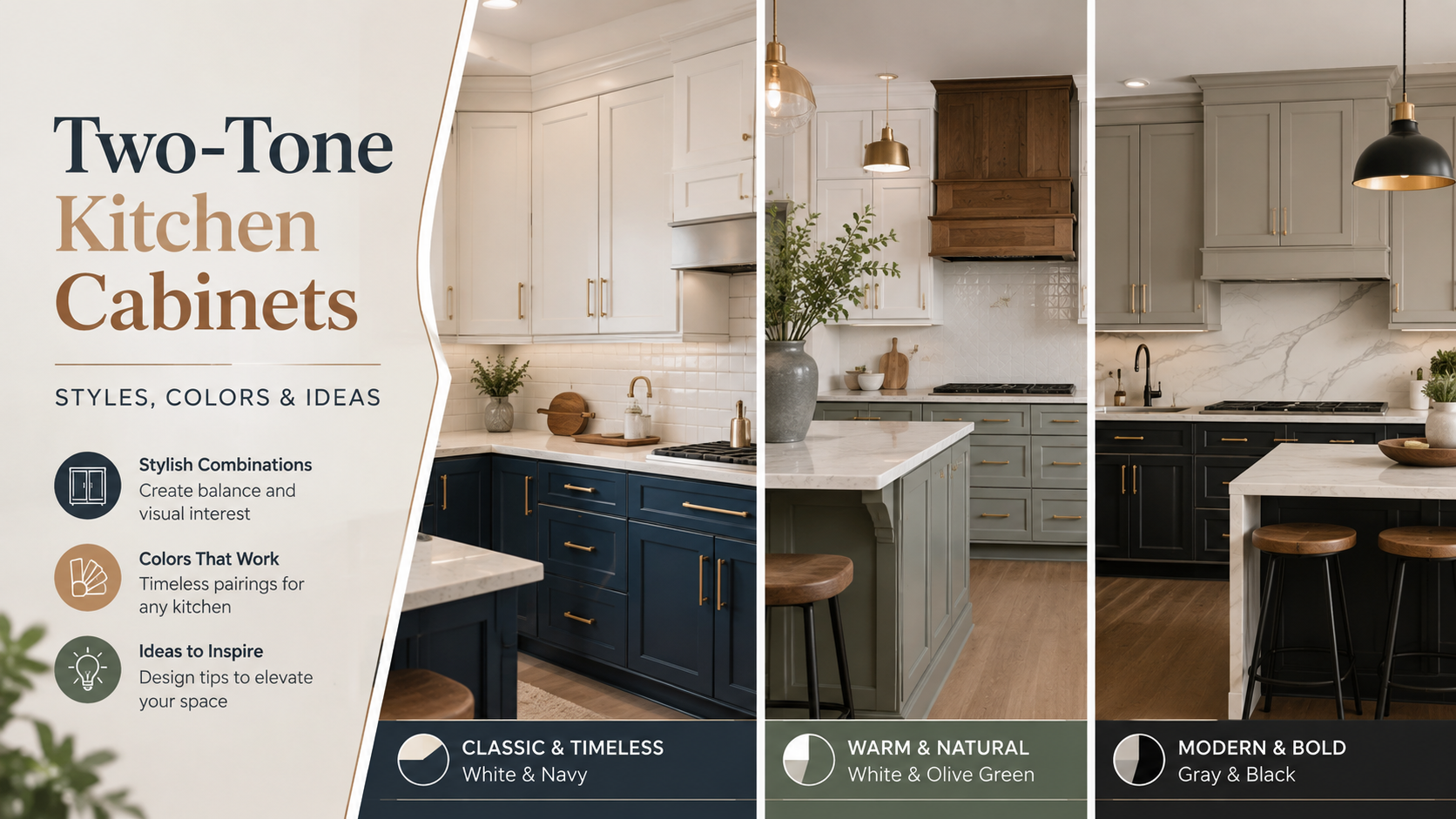
White and navy remains one of the easiest two-tone combinations to use successfully.
White creates a bright, clean foundation, while navy introduces depth without the severity of pure black. The combination works particularly well when navy is used on lower cabinets or a kitchen island and white is used on the upper cabinets.
For a more traditional kitchen, white Shaker cabinets with navy lowers and brushed brass hardware can create a classic appearance. For a contemporary kitchen, the same colors can be paired with flat-panel doors, simple hardware, and a minimalist backsplash.
The important consideration is the undertone of the white. A warm white can work beautifully with warm flooring and brass hardware, while a cooler white may be better suited to gray countertops and stainless-steel appliances.
Can You Mix Natural Wood With Painted Cabinets?
Absolutely. Natural wood and painted cabinetry can create one of the most visually interesting two-tone kitchen designs.
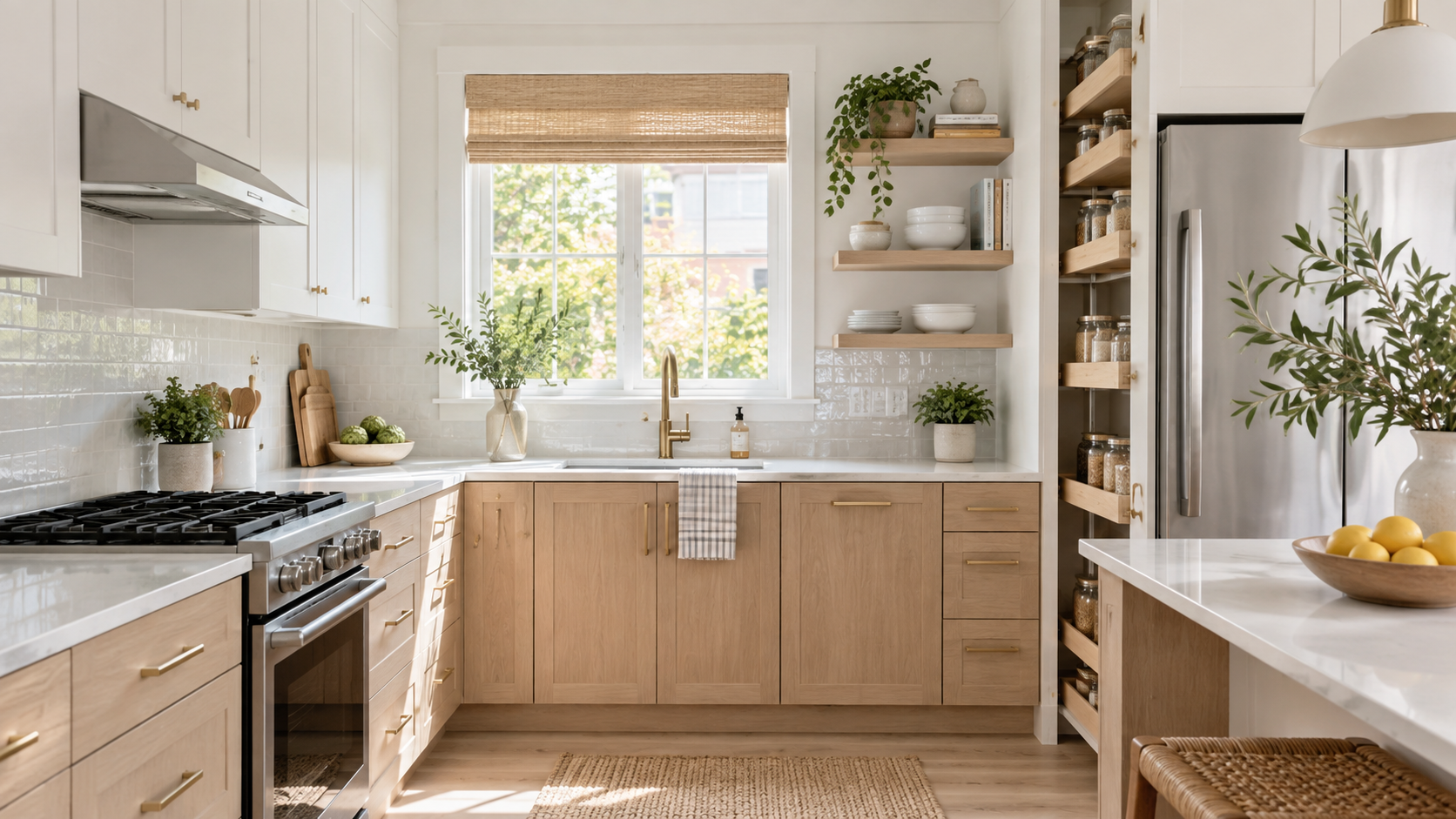
Wood introduces texture and warmth, while painted cabinets provide a clean block of color. You might use natural oak on the island and painted white cabinetry around the perimeter, or reverse the arrangement.
Natural wood can also be paired with darker colors such as black, charcoal, navy, or forest green. The result can feel modern without becoming cold.
NextDAY Cabinets offers a range of cabinet options and brands, and its cabinet catalog resources provide additional information about available cabinetry lines and finishes.
Are Two-Tone Shaker Cabinets a Good Choice?
Yes. Two-tone Shaker cabinets are particularly versatile because the simple door profile doesn’t compete with the contrast between the two colors.
Shaker cabinetry features a clean, recessed-panel design that works across many kitchen styles. Because of its straightforward appearance, the same cabinet style can be used in two different finishes without making the kitchen look overly busy.
For example:
- White Shaker uppers + navy Shaker lowers
- Warm white Shaker perimeter + natural wood island
- Light gray Shaker uppers + charcoal lowers
- Cream Shaker cabinets + sage green island
- Natural wood Shaker lowers + white uppers
NextDAY Cabinets’ Shaker cabinet guide explains why the style continues to work across modern and traditional kitchen designs.
For homeowners looking for specific color options, the Forevermark cabinet collection includes Shaker options in finishes such as Ice White, Light Grey, Nova Light Grey, Woodland Brown, and other colors.
Should the Island Be a Different Color?
Using a contrasting island is one of the simplest ways to create a two-tone kitchen.
You don’t necessarily have to use two colors across every cabinet in the kitchen. Instead, perimeter cabinets can remain one color while the island becomes the second tone.
For example:
White perimeter cabinets + navy island
This approach creates a strong focal point without visually dividing the entire kitchen.
A contrasting island can be especially effective when the island is large enough to function as the centerpiece of the room. You can reinforce the color by repeating it in smaller details such as bar stools, pendant lighting, window treatments, or decorative accessories.
For smaller kitchens, however, consider the visual weight of the island. A very dark island in a compact space can become dominant, so a softer contrast may be more appropriate.
 What Two-Tone Cabinet Colors Work Best in a Small Kitchen?
Two-tone cabinets can work extremely well in small kitchens, but color placement matters.
A common strategy is to keep upper cabinets light and use a deeper tone below. White, warm white, cream, or light gray can help maintain an open appearance above eye level.
Darker colors can then be introduced through:
- Lower cabinets
- A small island
- A pantry cabinet
- A single accent section
If the kitchen receives limited natural light, avoid using very dark finishes across most of the cabinetry. Instead, use the darker color strategically.
NextDAY Cabinets’ latest cabinet color guide also recommends balancing bold cabinet colors with lighter elements when designing smaller kitchens.
How Do You Choose Two Cabinet Colors That Work Together?
Start with the permanent elements of your kitchen rather than choosing cabinet colors in isolation.
Consider your:
- Countertops
- Flooring
- Backsplash
- Wall color
- Appliances
- Natural lighting
- Hardware
- Cabinet door style
Countertops are particularly important because replacing them after choosing cabinet colors can be expensive.
For example, a countertop with warm beige or cream veining may look better with warm white, cream, oak, or walnut cabinetry than with a very cool gray.
Similarly, a countertop with strong gray veining may work better with cooler cabinet tones.
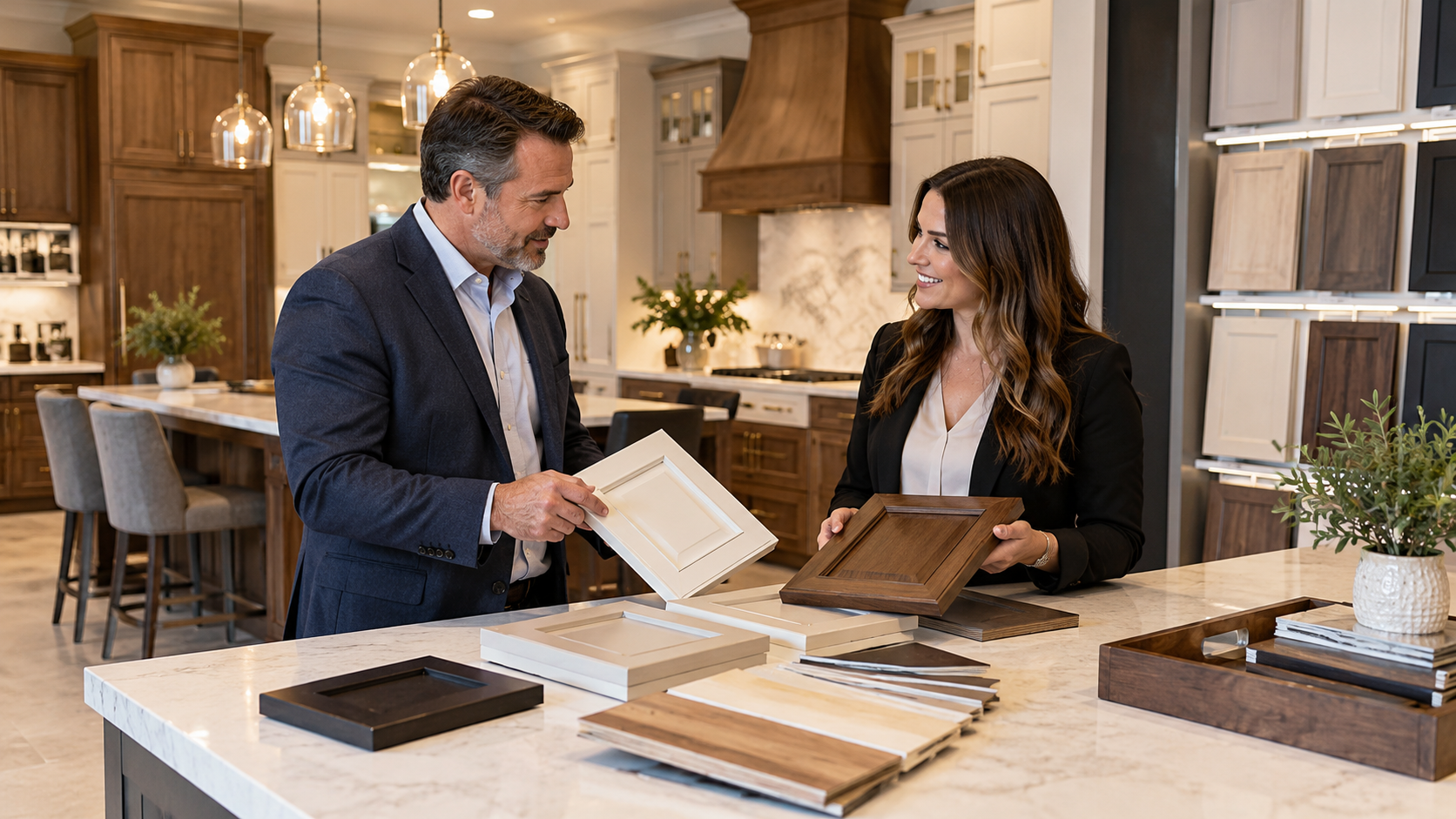
NextDAY Cabinets recommends looking at cabinet samples in the actual kitchen because showroom lighting can change how a color appears. Ordering or reviewing samples before making a full cabinetry decision is a practical way to reduce the risk of choosing a finish that looks different at home.
How Do Countertops and Backsplashes Work With Two-Tone Cabinets?
The countertop and backsplash should connect the two cabinet colors rather than compete with them.
If your cabinets already provide strong contrast, a simpler countertop can help maintain balance.
For example:
White + navy cabinets:
Consider a light countertop with subtle veining.
Natural wood + black:
A lighter stone or quartz countertop can provide contrast.
Cream + charcoal:
Warm white or natural stone-inspired surfaces can soften the darker cabinetry.
White + sage green:
Warm wood accents and neutral countertops can reinforce the natural aesthetic.
The backsplash can either blend into the cabinetry or introduce another texture. However, adding too many competing colors can make the kitchen feel visually fragmented.
What Hardware Looks Best With Two-Tone Cabinets?
Hardware is the detail that can bring two cabinet colors together.
Popular choices include:
- Brushed brass
- Aged bronze
- Matte black
- Brushed nickel
- Chrome
The right hardware depends on both cabinet colors and the overall kitchen style.
Brass hardware can add warmth to navy, green, cream, and natural wood cabinetry. Matte black can create a contemporary look with white, wood, or neutral cabinets.
You don’t necessarily need different hardware for each cabinet color. Using the same hardware throughout the kitchen is often the easiest way to create visual consistency.
Current kitchen design trends also show growing interest in warmer metal finishes and more distinctive hardware choices. For a broader look at current cabinet trends, see NextDAY Cabinets’ 2026 kitchen cabinet trends guide.
Which Cabinet Styles Work Best With Two-Tone Designs?
Two-tone cabinetry isn’t limited to one door style.
Shaker Cabinets
Shaker is one of the safest choices because its simple profile works with both bold and neutral colors.
Frameless Cabinets
Frameless cabinetry can be particularly effective in contemporary kitchens where the goal is clean lines and minimal visual interruption.
Raised Panel Cabinets
Traditional raised-panel doors can also be used in two-tone designs, especially when the colors are relatively classic, such as cream and navy or white and natural wood.
Natural Wood Cabinet Styles
Wood-grain cabinetry adds texture to a two-tone kitchen and can be paired with painted cabinets for a layered appearance.
For more information about current cabinet styles, NextDAY Cabinets’ guide to cabinet styles for 2026 covers Shaker, frameless, natural wood, and two-tone approaches.
Should Upper Cabinets Be Lighter Than Lower Cabinets?
They don’t have to be, but this is one of the most reliable two-tone layouts.
Light upper cabinets can make the upper portion of a kitchen feel less visually heavy. Darker lower cabinets provide contrast and can be practical in areas exposed to more everyday traffic.
However, reversing the arrangement can also work.
For example, a kitchen could use:
Dark upper cabinets + light lower cabinets
This creates a more dramatic effect and can work particularly well when the upper cabinetry is limited or when the room has strong architectural features.
The best arrangement depends on the amount of cabinetry, ceiling height, natural light, and overall layout.
How Can You Create a Two-Tone Kitchen Without Making It Look Busy?
The secret is to limit the number of competing design elements.
If your cabinets are two different colors, consider keeping at least some of the following elements simple:
- Countertops
- Backsplash
- Flooring
- Wall color
- Hardware
- Lighting
A useful approach is to choose two dominant cabinet tones and one supporting neutral.
For example:
Navy + white + natural wood
Here, navy and white are the primary cabinet colors, while natural wood can appear through flooring or accessories.
Another example is:
Sage + cream + brushed brass
The brass becomes a small accent rather than a third dominant color.
This creates a layered appearance while maintaining visual cohesion.
What Are the Best Two-Tone Kitchen Ideas for Different Design Styles?
Modern Kitchens
For modern kitchens, consider white and charcoal, natural wood and black, or warm white and deep green.
Flat-panel or minimalist Shaker doors can reinforce the contemporary aesthetic.
Transitional Kitchens
Transitional kitchens provide more flexibility. White and navy, cream and charcoal, or warm white and natural wood can all work well.
Farmhouse Kitchens
Try warm white with natural oak or cream with sage green. These combinations reinforce the warm, organic character associated with farmhouse interiors.
Traditional Kitchens
Classic combinations such as white and navy or cream and deep green can complement traditional architectural details.
Contemporary Kitchens
Black and wood, charcoal and light gray, or white and deep green can create stronger contrast for contemporary spaces.
What Should You Consider Before Ordering Two-Tone Cabinets?
Before placing your cabinet order, confirm that both finishes are available in the cabinet style and sizes required for your layout.
It’s also important to consider:
- Cabinet dimensions
- Door style
- Finish availability
- Matching panels
- Island panels
- Crown molding
- Fillers
- Toe kicks
- Hardware
- Lead times
- Installation requirements
- Warranty information
A two-tone design can involve more planning than a single-finish kitchen because the transition between colors needs to be intentional.
Working from a complete kitchen layout rather than selecting individual cabinet pieces can help prevent mismatched finishes or missing components.
NextDAY Cabinets offers professional design services to help customers plan cabinetry according to their kitchen requirements.
Where Can You Shop for Two-Tone Kitchen Cabinets?
When shopping for two-tone cabinets, look beyond individual colors. The cabinet construction, door style, finish, available sizes, accessories, and overall product line should all work together.
NextDAY Cabinets offers a broad selection of cabinet products for kitchen projects, including assembled cabinetry and multiple cabinet brands. Its cabinet collection is a useful starting point for exploring available options.
For homeowners and professionals who want to compare cabinet lines, the NextDAY Cabinets catalog page provides access to catalogs and product resources.
You can also explore Forevermark Cabinets for wood cabinetry, Shaker styles, and a range of painted and wood finishes that can be incorporated into two-tone kitchen designs.
Are Two-Tone Kitchen Cabinets Still in Style in 2026?
Yes. Two-tone kitchens remain an important design direction in 2026, although the approach is becoming more refined.
Instead of relying exclusively on dramatic black-and-white contrasts, homeowners are increasingly exploring combinations such as warm white and walnut, cream and charcoal, olive and natural wood, and soft neutral tones with deeper accents.
This shift gives two-tone cabinetry greater longevity because the concept can be adapted to changing design preferences.
The goal isn’t simply to follow a trend. A successful two-tone kitchen should still make sense with the home’s architecture, lighting, flooring, countertops, and the homeowner’s personal style.
How Do You Keep Two-Tone Cabinets Looking Cohesive Over Time?
Choose a combination that has enough contrast to be visually interesting but enough similarity to feel connected.
One of the easiest ways to accomplish this is to repeat a color or material elsewhere in the kitchen.
For example:
- Repeat the island color in pendant lights.
- Use wood cabinetry with matching wood accents.
- Coordinate brass hardware with warm lighting.
- Repeat a cabinet color in bar stools or decor.
- Use the countertop as a bridge between the two cabinet tones.
It is also worth choosing a cabinet finish that fits your lifestyle. Kitchens experience daily exposure to moisture, cooking residue, fingerprints, and general wear, so appearance should always be considered alongside durability and maintenance requirements.
Two-Tone Kitchen Cabinets: Final Thoughts
Two-tone kitchen cabinets give homeowners more freedom to create a kitchen that feels intentional, personalized, and visually balanced. Whether you choose classic white and navy, warm wood and black, cream and charcoal, or a softer combination of neutrals, the key is to consider the entire room rather than choosing cabinet colors independently.
Start with the permanent elements—countertops, flooring, backsplash, and lighting—then select cabinet colors that complement those features. From there, choose a cabinet door style, hardware, and color placement that support the overall design.
If you’re ready to explore cabinet options, browse NextDAY Cabinets’ kitchen cabinet collection or review the available cabinet catalogs to compare styles, finishes, and product lines.
Frequently Asked Questions About Two-Tone Kitchen Cabinets
Are two-tone kitchen cabinets a good idea?
Yes. Two-tone cabinets can add contrast, depth, and visual interest while allowing homeowners to incorporate bold colors without using them throughout the entire kitchen.
What is the most popular two-tone kitchen cabinet combination?
White paired with navy, gray, natural wood, or another darker tone remains a versatile choice. The best combination depends on the kitchen’s lighting, countertops, flooring, and overall style.
Should two-tone cabinets have the same door style?
Using the same door style in both colors is generally the easiest way to create a cohesive look. The color difference then becomes the main design feature.
Can I use three cabinet colors in one kitchen?
You can, but it requires more careful planning. For most kitchens, two primary cabinet tones are easier to balance. A third material, such as natural wood, can be introduced as a small accent.
Are two-tone cabinets good for small kitchens?
Yes. Light upper cabinets combined with darker lower cabinets can provide contrast while keeping the upper portion of a small kitchen visually open.
Should the kitchen island match the cabinets?
Not necessarily. A contrasting island is one of the most popular ways to create a two-tone kitchen without changing every cabinet in the room.
Are two-tone Shaker cabinets still popular?
Yes. Shaker’s simple profile makes it particularly adaptable to contrasting colors and finishes, which is why it continues to work well in two-tone kitchens.
What color cabinets are trending in 2026?
Warm neutrals, natural wood, deeper blues, greens, charcoal, and other earthy tones are prominent in current kitchen design. Two-tone combinations allow these colors to be incorporated without overwhelming the space.
How do I choose cabinet colors for my countertop?
Start with the countertop’s undertones. Warm countertops generally pair well with warm whites, creams, wood tones, and warmer greens, while cooler surfaces can work with gray, blue, and cooler white cabinetry.
Can I mix painted and wood cabinets?
Yes. Painted cabinets and natural wood can create a layered, sophisticated appearance. The wood finish can be used on an island, lower cabinets, or a smaller accent area.
Where can I buy two-tone kitchen cabinets?
You can explore different cabinet brands, styles, colors, and finishes through NextDAY Cabinets. Its catalog and design resources can help you evaluate options before ordering.