
How long kitchen cabinets last depends far less on the doors you see and far more on the boxes behind them. A well-built cabinet can outlive two owners. A poorly built one can start sagging inside a decade, even though the finish still looks fine from across the room.
That gap is why the question is worth answering properly. This guide covers realistic lifespans by construction type, what actually shortens them, the signs that tell you a kitchen has reached the end, and how to tell the difference between cabinets that need repair and cabinets that need replacing.
The short answer
The National Association of Home Builders puts kitchen cabinets near the top end of the interior components it studied. In its Study of Life Expectancy of Home Components, the association found that kitchen cabinets are expected to last up to 50 years.
That figure is a ceiling rather than an average, and it assumes sound construction, competent installation and reasonable care. In practice, here is what we see:
| Construction | Typical lifespan | Usually fails first at |
|---|---|---|
| Solid wood face frame with plywood box | 30 to 50 years | Finish and hardware, long before the box |
| Plywood box with MDF doors | 20 to 30 years | Door edges and painted surfaces |
| Particleboard box, laminate finish | 10 to 15 years | Box bottoms, shelf sag, hinge screws |
| Thermofoil doors | 10 to 15 years | Delamination near heat sources |
| Stock builder-grade cabinets | 10 to 20 years | Drawer boxes and mounting points |
Most kitchens are replaced long before the cabinets fail. People remodel because the layout stopped working, the style dated, or they bought a house with somebody else’s kitchen in it. Actual structural failure is the less common reason, and that is worth knowing before you spend money on a full replacement you may not need.
What decides the number
Box material
This is the single biggest factor and the one buyers pay least attention to, because the box is the part you cannot see in a showroom.
Plywood boxes handle moisture, hold screws better and resist sagging under load. Particleboard is heavier, cheaper and considerably less forgiving. A particleboard shelf carrying a stack of dinner plates will bow over time, and once a particleboard bottom gets wet under a sink, it swells and does not recover.
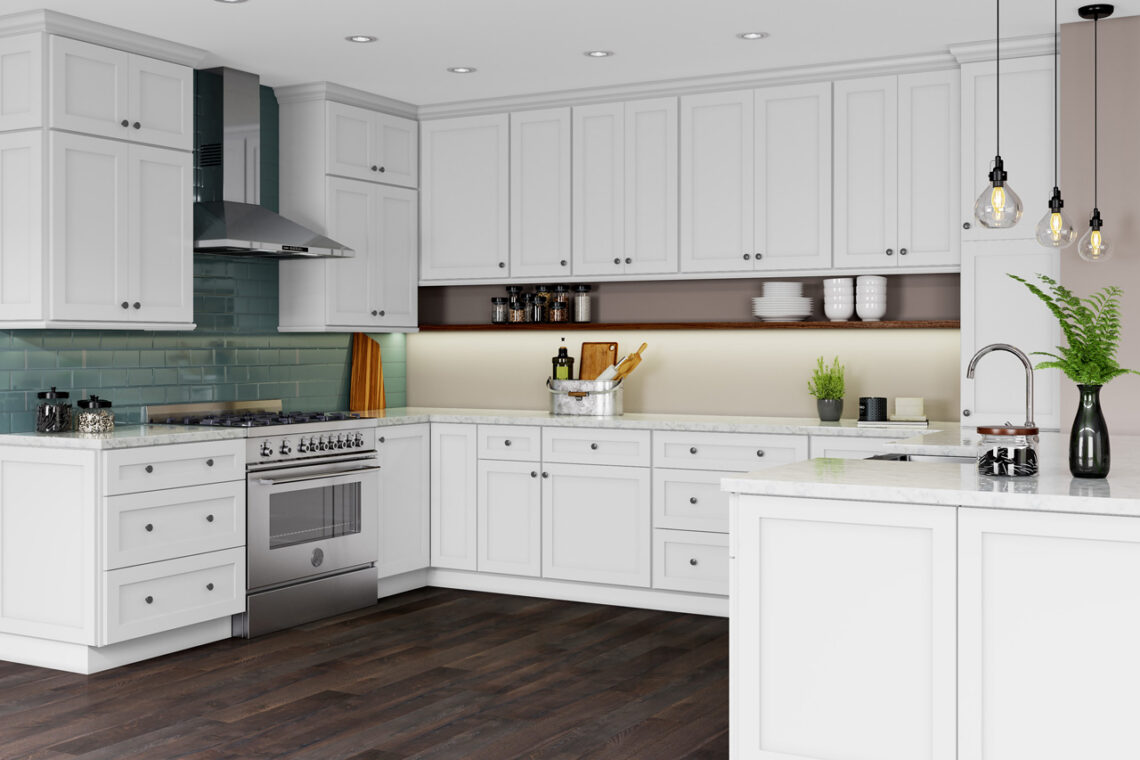
If you are choosing cabinets now and want them to be a long-term decision, the box specification matters more than the door style. Our guide to choosing the right kitchen cabinet material covers the tradeoffs in more detail, and for rooms that see steam and splash, our look at the best cabinet materials for bathrooms and high-humidity areas applies equally to the area around a kitchen sink.
Joinery and assembly
How the box is put together decides whether it stays square. Dovetailed drawer boxes outlast stapled ones by a wide margin. Cabinets assembled with cam locks and glue hold better than those relying on staples alone.
This is also where ready-to-assemble and pre-assembled cabinets differ, and the difference is not what most people assume. We compare them directly in RTA vs pre-assembled cabinets, including how assembly quality affects long-term performance.
The finish
A finish is a wear surface. It takes grease, steam, cleaning products and fingernails every day, and it usually shows age before the structure does. Catalyzed conversion varnish and factory-applied finishes hold up far better than site-applied paint, which is one reason repainted cabinets often need redoing within five to eight years.
Hardware
Hinges and slides are the moving parts, and moving parts wear. The useful thing here is that the industry has an actual benchmark for this. Under the ANSI/KCMA A161.1 quality certification program, cabinet doors and drawers are cycled 25,000 times, wall cabinets are subjected to a 600-pound load test, and shelves are held under load for seven days to check for deflection.
Twenty-five thousand cycles is roughly seven openings a day for ten years. It is a floor for acceptable performance rather than a promise of longevity, but it gives you a real number to ask about instead of a vague claim that something is well made. The standard is the only performance standard specifically for kitchen and vanity cabinets, which is why it is worth knowing by name.
Worth saying plainly: certification varies by manufacturer and by product line, so ask which specific line you are being quoted rather than assuming a brand-wide answer.
Installation
A cabinet run that is out of level puts uneven load on every hinge and slide in the kitchen. Doors stop closing flush, drawers rub, and the hardware wears out early. Installation quality does not show up on day one. It shows up in year six.
Where they live
Cabinets next to a dishwasher, above a range, or under a window that leaks age faster than the ones across the room. Steam, heat and repeated moisture are what actually destroy cabinet boxes, and they do it locally rather than evenly.
Signs it is time for an upgrade
Some of these mean repair. Some mean replace. The distinction matters, so both are noted.
- Doors that will not stay closed or sit visibly crooked. Usually a hinge or a loose screw. Repair, not replace, unless the frame itself has moved.
- Drawers that stick, drop or scrape. Slides wear out and can be swapped. If the drawer box itself has come apart at the corners, that is a different conversation.
- Soft or swollen spots on a cabinet bottom. Almost always water, almost always under the sink. Particleboard that has swollen will not dry back to shape. This one is replace.
- Shelves that bow in the middle. A sign the material is under-specified for the load. Individual shelves can be replaced, but if it is happening throughout the kitchen, the whole set is telling you something.
- A musty smell inside the cabinets. Moisture is getting in somewhere and has been for a while. Find the source before deciding anything else.
- Finish that is peeling, checking or delaminating. On thermofoil, particularly near the oven, this is not repairable and the doors need replacing.
- Loose face frames or boxes pulling away from the wall. Either the mounting failed or the box has lost its structural integrity. Get this looked at rather than waiting.
- The layout is the problem, not the cabinets. If the cabinets are sound but you are working around a bad plan, moving the layout is a remodel rather than a repair, and refacing will lock in the problem you actually want to fix.
That last one is the most common situation we see, and it is the one where people most often spend money in the wrong place.
Repair, reface or replace
Once you know what is wrong, the decision usually resolves quickly.
| Situation | Best route |
|---|---|
| Hardware worn, boxes sound, layout works | Repair. New hinges and slides restore function cheaply. |
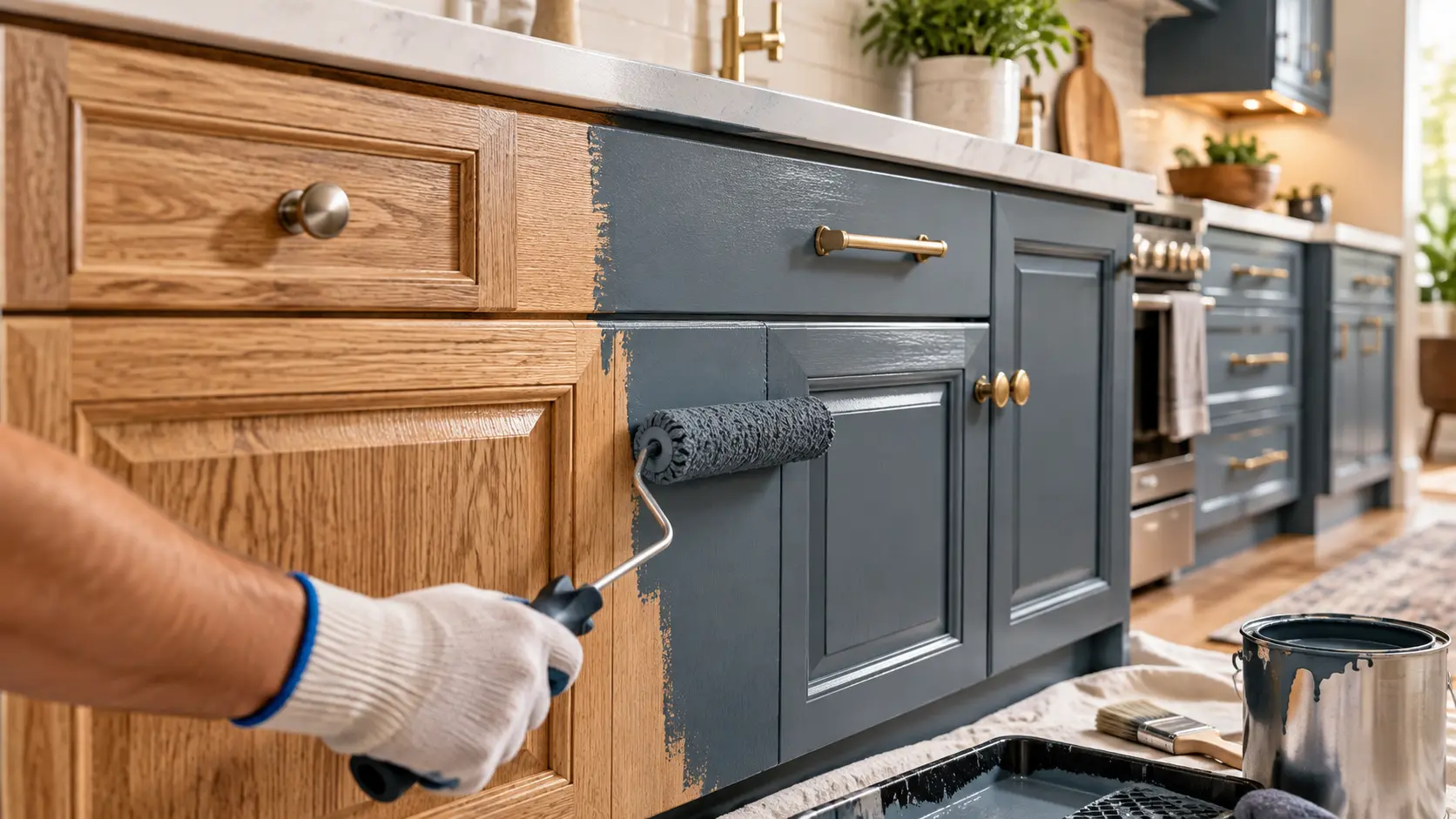
| Boxes sound, layout works, style dated | Reface or repaint. You are only changing what you see. |
| Boxes failing, or layout does not work | Replace. Refacing sound-looking doors onto failing boxes wastes money. |
| Water damage in more than one cabinet | Replace, and fix the source first. |
| Moving walls, plumbing or appliances | Replace, because the run is changing anyway. |
Refacing is genuinely the right answer more often than the industry admits, and it is the cheapest route to a kitchen that looks new. It only works when the boxes underneath are sound and the layout already suits you. We go through when each option makes sense in new cabinets vs refacing.
How to get more years out of the cabinets you have
 Most of what shortens cabinet life is avoidable.
- Wipe up water around the sink and dishwasher rather than letting it sit at the toe kick.
- Run the range hood. Steam and grease are what age finishes fastest.
- Skip ammonia, bleach and abrasive cleaners. Warm water and a mild detergent handle almost everything, and harsh products strip the finish that protects the wood.
- Tighten hinge screws once a year. It takes ten minutes and prevents most door alignment problems.
- Check under the sink twice a year for slow leaks, since the damage is done long before you notice it.
- Do not hang tea towels over cabinet doors above the dishwasher. The steam gets trapped against the finish.
Our cabinet care guidance covers the specifics by material, and there is a printable care and cleaning guide worth keeping in a drawer.
If you are buying cabinets to last
Ask about the box, not the door. Specifically:
- Is the box plywood or particleboard, and what thickness?
- How are the drawer boxes joined?
- What is the finish, and is it factory applied?
- What is the hinge and slide rating, and are they covered by warranty?
- What does the warranty actually cover, and for how long?
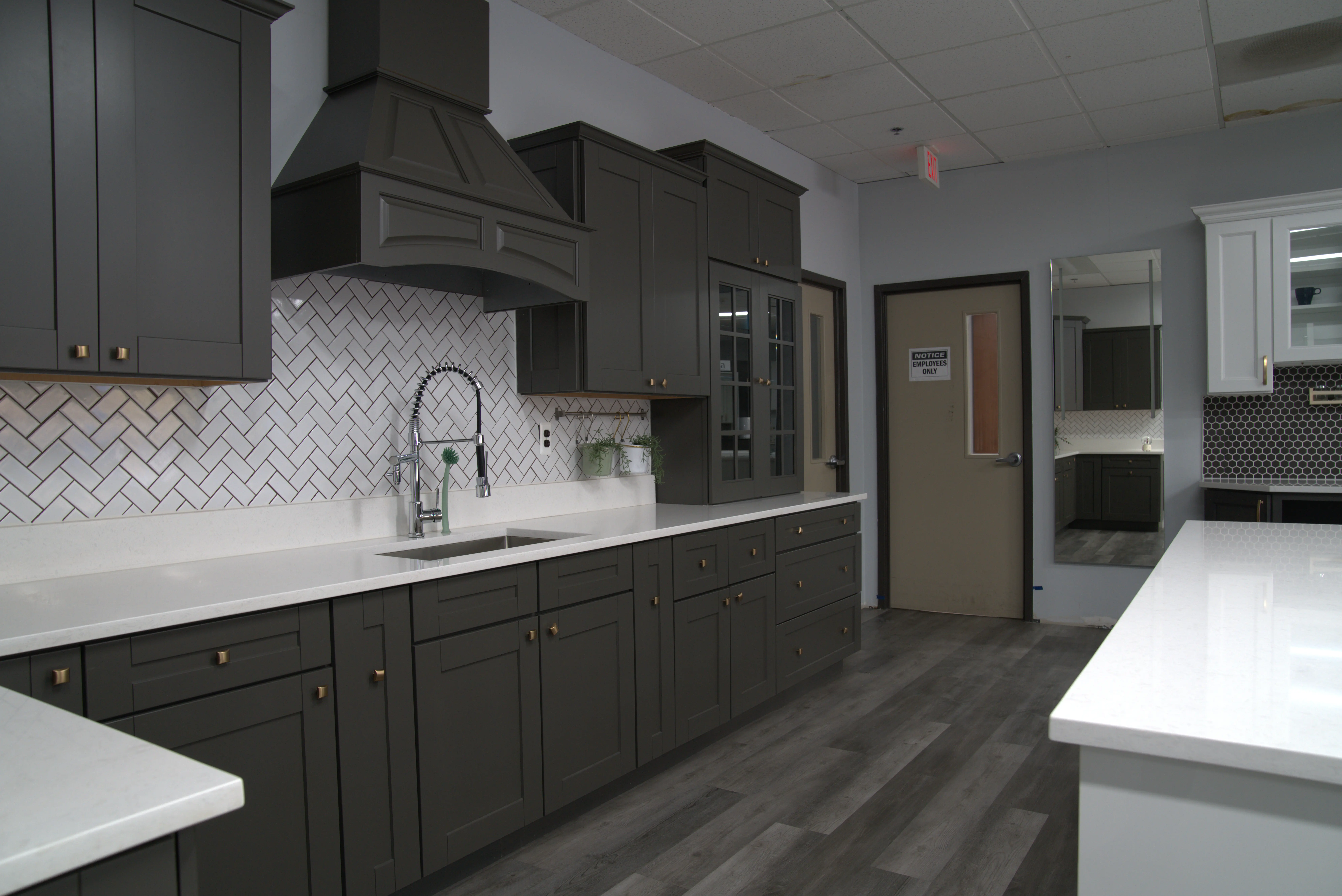
The answers to those five questions tell you more about how long a kitchen will last than any showroom display. If you want to see construction differences side by side rather than take anybody’s word for it, that is what a showroom visit is for. You can compare full door styles and open the drawers yourself at any of our showrooms in Chantilly, Alexandria, Woodbridge, Richmond, Beltsville and Elk Grove Village.
Our solid wood cabinet styles guide is a useful starting point, and Waypoint cabinetry and Shiloh cabinetry are both worth reading if you are weighing specific lines on construction rather than looks.
Frequently asked questions
How long do kitchen cabinets last on average?
Well-built cabinets with plywood boxes and solid wood face frames typically last 30 to 50 years. Particleboard and builder-grade cabinets more commonly last 10 to 20 years. The National Association of Home Builders puts the ceiling for kitchen cabinets at up to 50 years, which assumes sound construction and reasonable care.
Do painted cabinets last as long as stained wood?
Structurally, yes, since the box is the same either way. The difference is in the finish. Painted surfaces show chips more visibly, particularly on edges and around handles, and site-applied paint typically needs redoing every five to eight years. Factory-applied finishes last considerably longer.
When should kitchen cabinets be replaced instead of repaired?
Replace when the boxes themselves have failed, meaning swollen bottoms, water damage across multiple cabinets, or frames pulling loose. Repair when the problem is hardware, alignment or finish. If the layout is the real issue, replacing is the only route that fixes it.
Is refacing worth it, or is it better to buy new cabinets?
Refacing is worth it when the boxes are sound and the layout works, because you are only paying to change what you see. It is the wrong choice when the structure has failed or the kitchen plan needs to change, since new doors on failing boxes will not solve either problem.
What damages kitchen cabinets fastest?
Standing water at the sink and dishwasher, steam from an unvented range, and harsh cleaning products. All three are avoidable, and together they account for most of the premature failure we see.
Do more expensive cabinets actually last longer?
Often, but not automatically. Price frequently buys door style and finish rather than box construction. A mid-priced cabinet with a plywood box will outlast an expensive one with a particleboard box, which is why asking about construction specifics matters more than comparing headline prices.
Working out where your kitchen stands
If the cabinets are sound and the layout works, spend on hardware and finish and keep them. If the boxes have gone or the plan is wrong, replacing is the honest answer and refacing will only postpone it.
The fastest way to know which situation you are in is to open a few doors and look at the boxes rather than the fronts. Check under the sink, press on a shelf, and see whether the drawer boxes are still square.
When you are ready to compare options, browse the full range at nextdaycabinets.com/products, or bring your measurements to a showroom. Contractors and builders working on a client’s kitchen can also use our professional design services to see a full layout before ordering.