
Kitchen cabinet door styles account for most of what people notice about a kitchen and very little of what the kitchen costs to build. The boxes behind them are largely the same. The door is the visible surface, the thing your hand touches, and the element that dates fastest, which makes it worth more thought than the ten minutes it usually gets at the end of a showroom visit.
This guide covers the main styles in use, what each one is actually made of, which ones need a face frame, how each behaves over years of cleaning, and how to choose without ending up with a kitchen that reads as a particular decade.
 Start with how a door is built
Two doors can look similar and be built entirely differently, and the construction determines how the door behaves over time.
Five-piece doors are made from five separate parts: two vertical stiles, two horizontal rails, and a centre panel that sits in a groove between them. Shaker and raised panel doors are both five-piece. The centre panel is not glued in place, which is deliberate, because wood expands and contracts with humidity and a floating panel accommodates that movement. A glued panel would split.
Slab doors are a single flat piece, usually an engineered core with a veneer, laminate, or painted finish over it. There are no joints, so there is nothing to collect dust and nothing to move independently.
The practical consequence. A five-piece painted door on a solid wood frame will sometimes show a fine line at the joint between the stile and the panel after a season or two. This is the panel moving inside the frame and it is a characteristic of the construction rather than a defect. A painted slab door does not do this because there is no joint to open.
This is one of the more common causes of disappointment in a painted kitchen, and it is entirely avoidable if you know about it beforehand.
The main door styles
Shaker
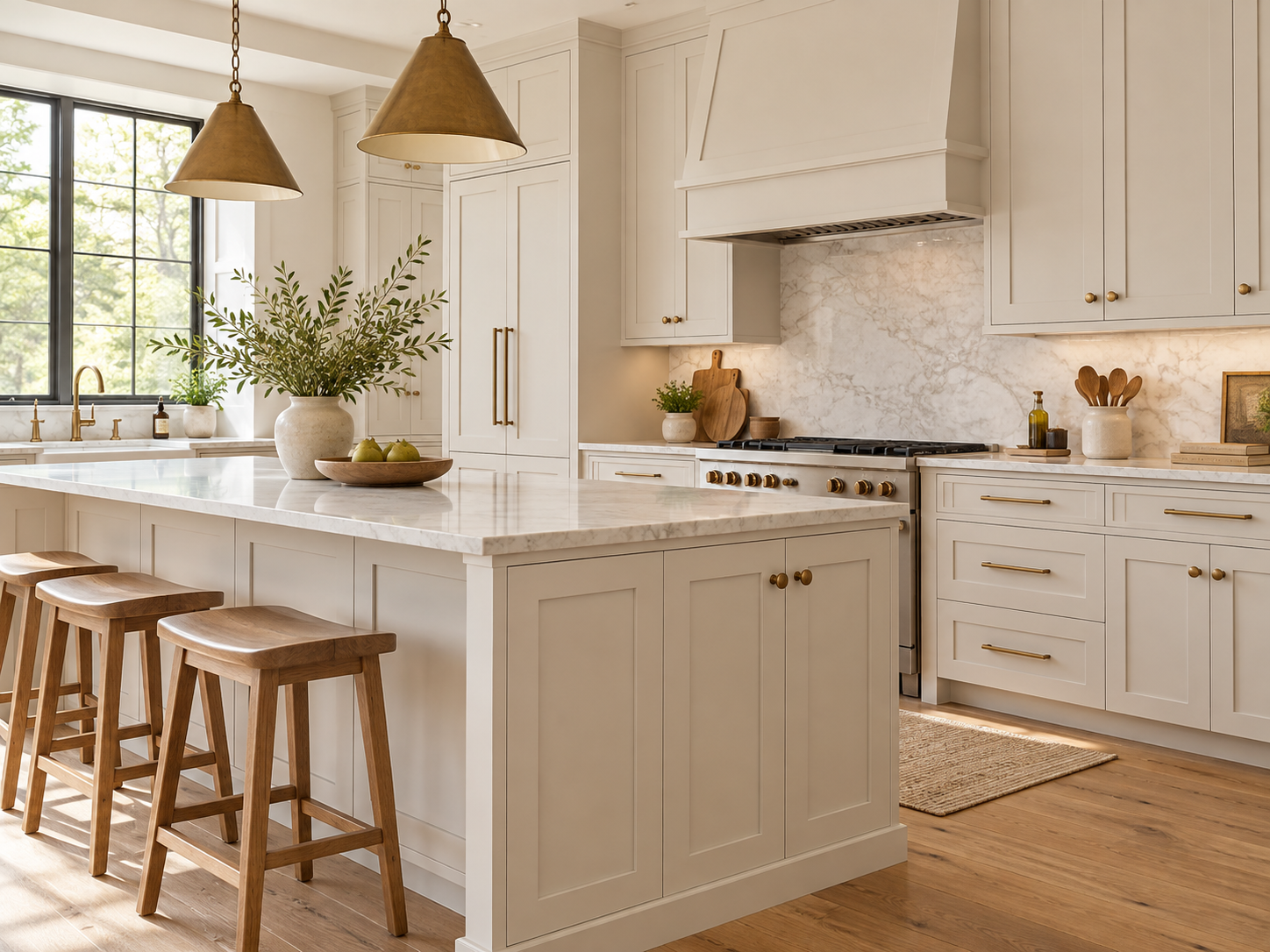
A flat centre panel inside a square-edged frame. The most specified door style in the United States and has been for over a decade.
Why it works. It is visually quiet, so it does not compete with anything else in the room. It suits almost every kitchen from traditional to modern depending on the finish and the hardware. And it has an unusually long track record, which matters if you plan to keep the kitchen for fifteen years.
Where it varies. Not all Shaker doors are the same. Frame width ranges from around 2 inches to around 3 inches, and that difference changes the proportion noticeably, particularly on smaller doors and drawer fronts. A wide frame on a narrow door leaves very little panel showing. Worth looking at a Shaker door in the actual size you are ordering rather than on a large sample.
Cleaning. There is an inside corner where the panel meets the frame, and it collects. In a cooking zone this becomes visible over time and needs attention rather than a wipe.
 Slab, also called flat panel
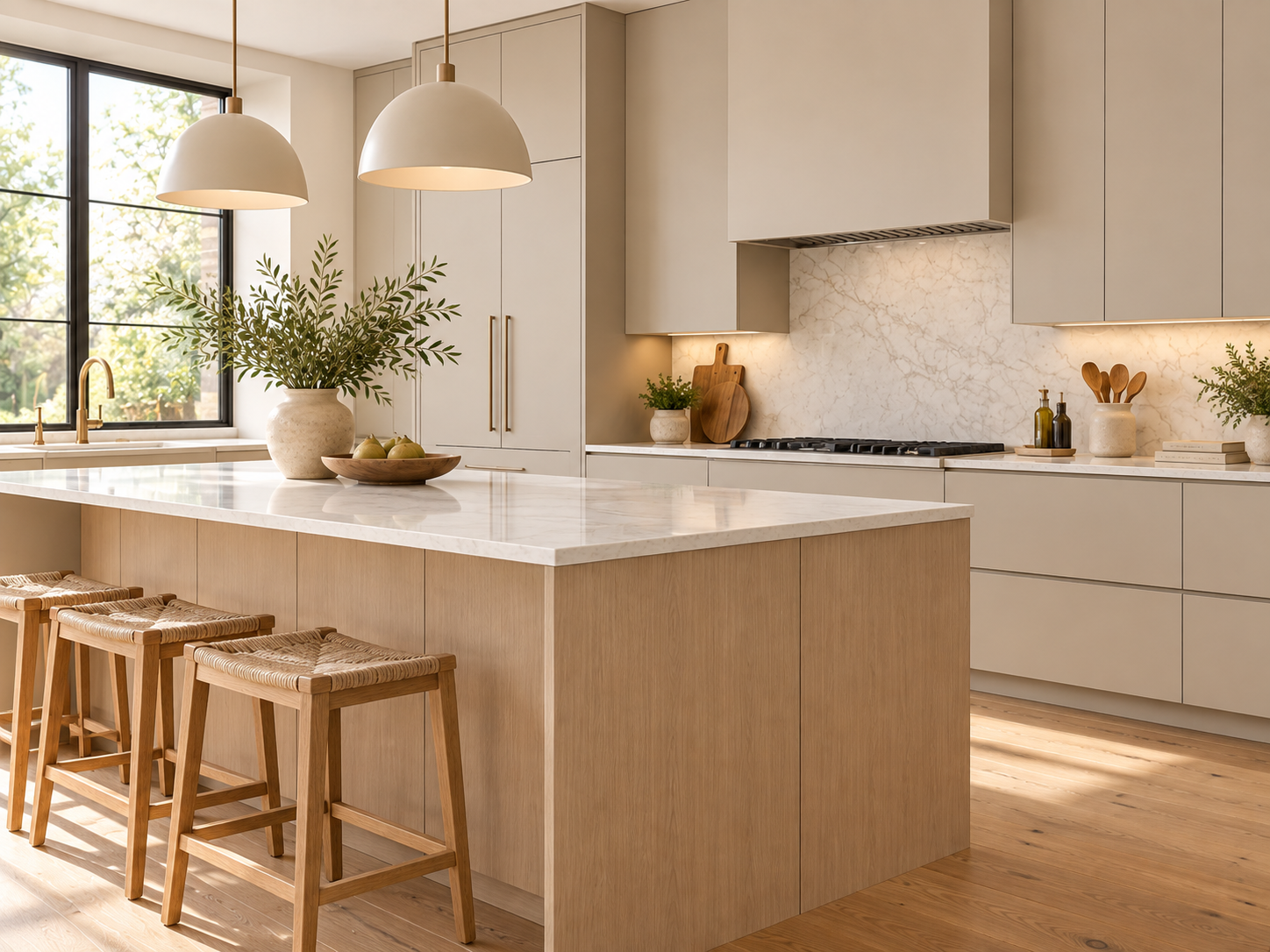
A single flat face with no detail at all.
Why it works. It is the cleanest option, it is the easiest to clean, and it puts the emphasis on the material rather than the shape. In a kitchen where the worktop, the backsplash or the wood grain is the point, a slab door gets out of the way.
What it demands. Precision. With no detail to distract the eye, the reveal between doors is the visual event, and any inconsistency in the gaps is obvious. Slab doors in a frameless kitchen look excellent when installed well and unforgiving when not.
On material. Slab doors in wood veneer show grain continuously across a run if the doors are sequenced, which is a considerable upgrade in appearance and needs to be specified rather than assumed. Painted slab doors are usually an engineered core rather than solid wood, precisely to avoid movement.
Hardware matters more here. With no door detail, the pull is the only ornament, so it carries more weight than in any other style. Our knobs and pulls range covers the options, and the sizing rules are worth following: drawers wider than about 24 inches want a pull rather than a single centre knob, since a knob in the middle of a wide drawer racks it slightly on every opening.
Raised panel
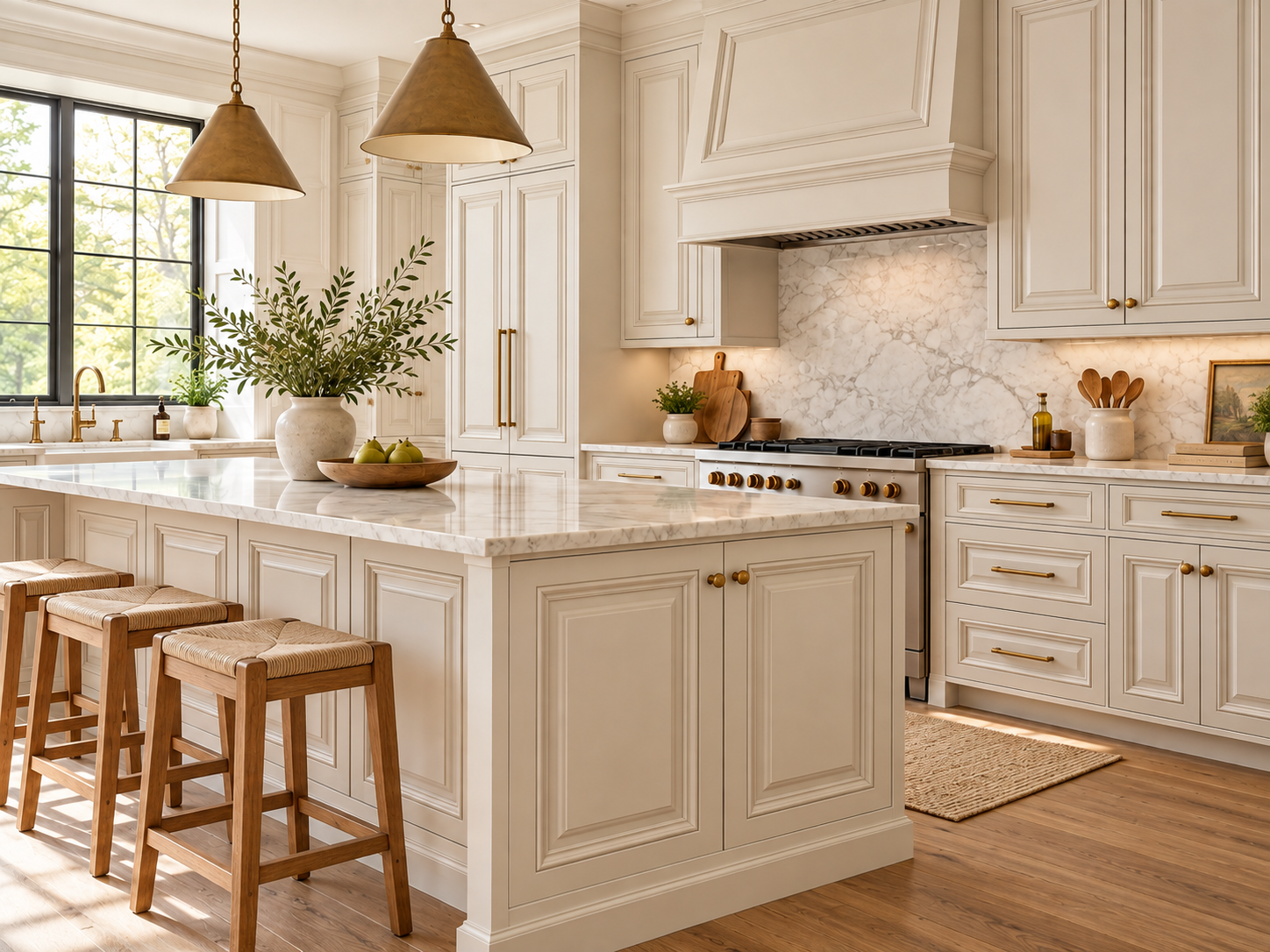
A five-piece door where the centre panel is profiled, so it sits proud of the surrounding frame rather than flat within it.
Why it works. It carries more visual weight and reads as traditional. In a house with substantial trim, panelled interior doors and traditional proportions, a raised panel kitchen belongs. In a contemporary room it can look borrowed.
Where it goes wrong. Scale. A raised panel door has a profile, and that profile occupies a fixed width regardless of how big the door is. On a small door or a drawer front, the profile takes over and the panel shrinks to almost nothing. Most manufacturers handle this by switching to a flat panel on narrow drawer fronts, and it is worth asking how a given range handles it.
Cleaning. The most demanding of the common styles, because a profile has several surfaces and at least one of them faces up.
Inset
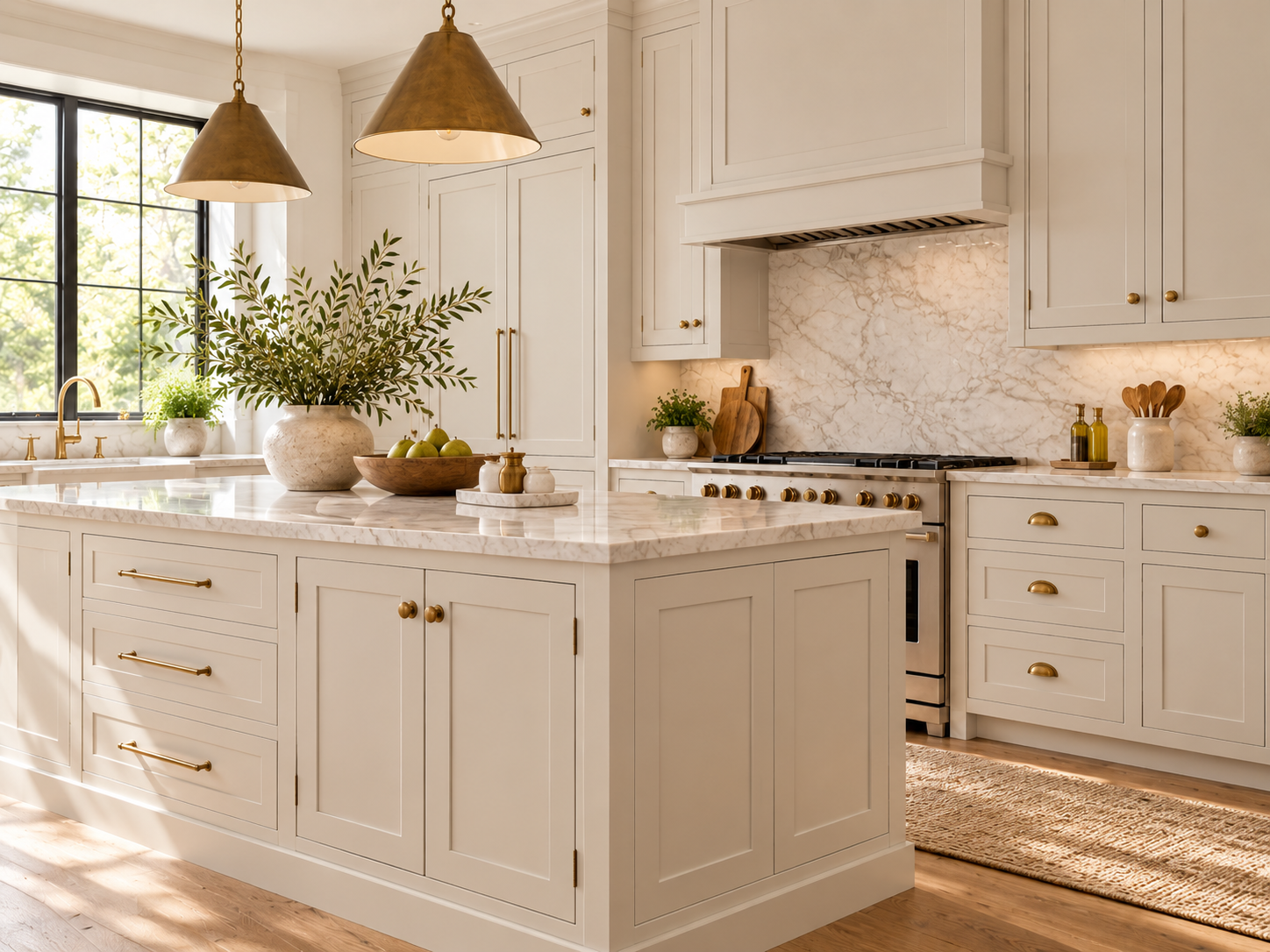
Not a door profile but a way of hanging the door. Inset doors sit flush inside the cabinet opening rather than overlaying the frame, so the door face and the frame face are in the same plane.
Why people want it. It is the most refined look available in cabinetry, it reads as furniture rather than as fitted units, and it is unmistakable once you know what to look for.
Two things to know before committing. Inset requires a face frame, so it rules out frameless construction entirely. Our comparison of framed and frameless cabinets covers what else that decision affects.
And inset costs more, for a specific reason: the tolerances are far tighter. An overlay door hides the opening, so a small variation is invisible. An inset door sits inside the opening with a consistent gap all the way round, and any inconsistency in that gap is the first thing anyone sees.
The seasonal point nobody mentions. Solid wood inset doors move with humidity. In a dry winter the gaps open slightly and in a humid summer they close. This is normal and it is a genuine consideration in a region with the humidity swing we get here. The US Environmental Protection Agency recommends keeping indoor relative humidity between 30 and 50 percent, which happens to be the range where inset doors behave most consistently.
 Beaded and applied moulding
Variations rather than separate categories. A beaded door adds a small bead detail at the inside edge of the frame. Applied moulding adds a decorative profile onto the face.
Both increase the traditional character and both add cleaning surfaces. They suit period houses and formal kitchens, and they date faster than the plainer styles.
Glass front
Any of the above with glass in place of the panel.
The honest assessment: glass fronts look excellent in photographs and require the contents to be arranged rather than stored. Clear glass shows everything. Reeded, fluted, seeded and frosted glass all give you the light and the depth without the requirement to keep the inside tidy, and they have become the more common specification for that reason.
Worth limiting to one or two cabinets rather than a run. A whole wall of glass fronts is a display cabinet, not a kitchen.
Comparison
| Style | Construction | Needs face frame | Cleaning | Reads as |
| Shaker | Five-piece | No | One inside corner | Neutral, versatile |
| Slab | Single piece | No | Easiest | Modern, material-led |
| Raised panel | Five-piece, profiled | No | Most demanding | Traditional |
| Inset (any profile) | Either | Yes | As per profile | Furniture-like, refined |
| Beaded | Five-piece plus detail | No | Demanding | Period, formal |
Finish, which matters as much as shape
The same door in two finishes is two different kitchens.
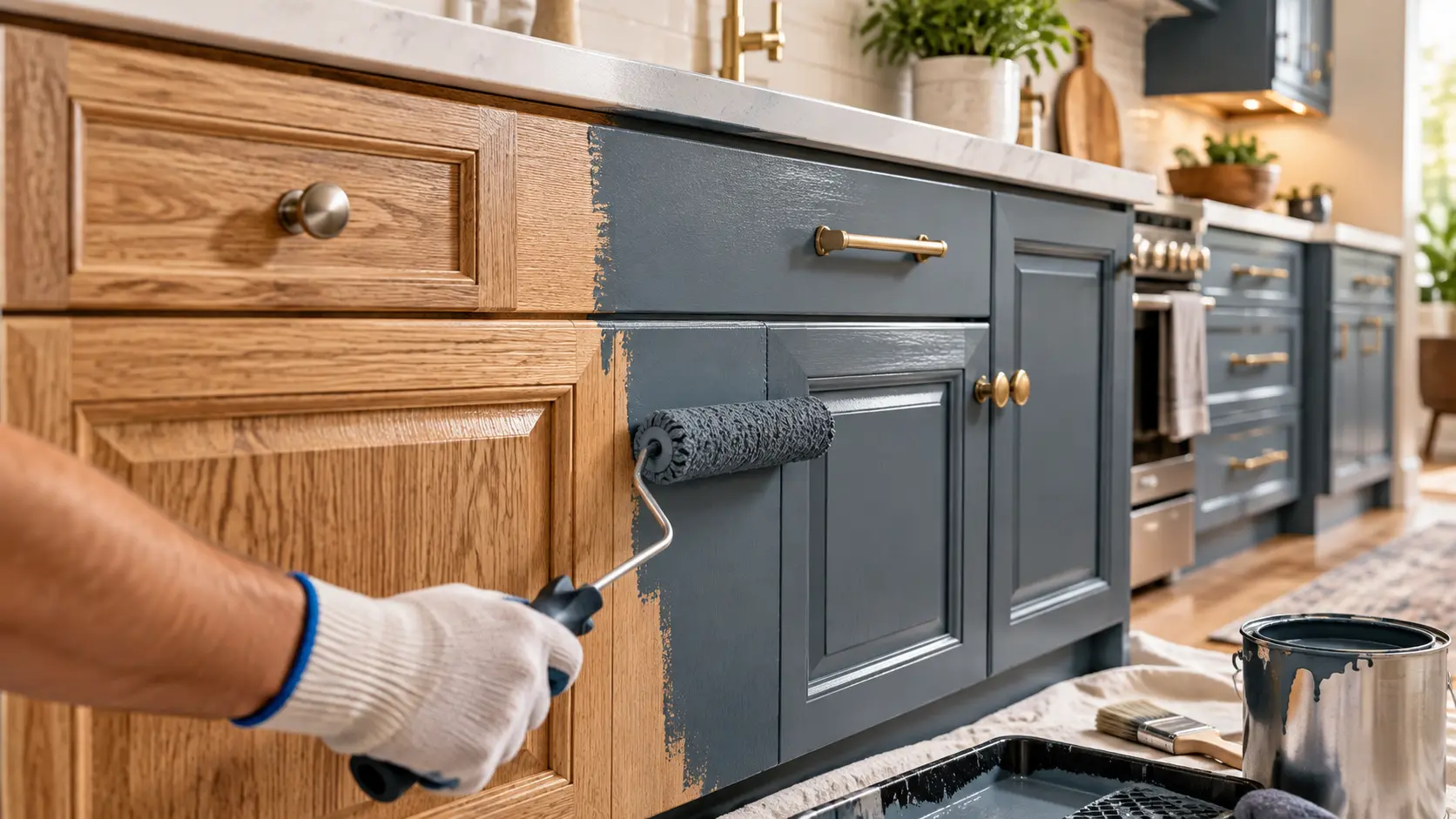
Painted. The most specified finish. Gives a uniform colour with no grain showing. On five-piece doors, see the note above about joint lines. Painted finishes show wear at the points of contact, typically the edge beside the sink and the door below the hob, and the wear shows as a slight sheen change before it shows as damage.
Stained. Shows the grain, which means the wood species becomes a design decision rather than a substrate. Oak, maple, cherry and hickory all take stain differently and all have distinct grain patterns. Stained finishes hide wear far better than painted ones, which is a practical argument in a hard-working kitchen.
Thermofoil and laminate. A film or laminate over an engineered core. Consistent, hard-wearing on the face, and considerably less expensive. The limitation is heat: sustained heat, typically from an adjacent appliance without proper heat shielding, can affect the bond over time.
Custom colour. If nothing in a standard range is right, custom paint is available. Our custom cabinet paint colors programme covers how that works.
A word on what is in the door
Most cabinet doors and boxes involve composite wood products, and there is a regulation worth knowing about.
Composite wood products sold in the United States must comply with formaldehyde emission standards under EPA’s TSCA Title VI rule, which sets limits for hardwood plywood, particleboard and medium density fibreboard. Compliant product is labelled as such.
Separately, the industry performance standard for cabinet construction is ANSI/KCMA A161.1, which sets out structural, door and drawer cycle testing. Certification is granted to specific product lines rather than to a manufacturer’s whole catalogue, so it is worth asking which of the products in front of you are covered rather than assuming a blanket answer.
Choosing one you will still like
A few tests that are more useful than looking at photographs.
Look at it in the size you are buying. Showroom samples are usually generous. A Shaker door with a 3 inch frame looks balanced at 24 inches wide and heavy at 12 inches.
Look at it in your own light. Showroom lighting is bright, even and usually cool. Your kitchen probably is not. Take a door sample home and look at it at the times of day you use the room, particularly in the evening.
Consider the rest of the house. A kitchen that shares a sight line with a living room reads as part of that room. Matching the door style’s formality to the trim and interior doors elsewhere is a more reliable guide than any trend.
Think about the ten-year question. Some styles carry a decade stamp and some do not. Shaker and slab have both been in continuous use for long enough to have proven they are not a moment. Heavy applied moulding, and any style with a strong decorative signature, carries more risk.
Be realistic about cleaning. This sounds minor and it is the thing people mention most when they talk about a kitchen they have lived with. If nobody in your household is going to detail an inside corner, a profile is a poor choice.
Sequence, and where this decision belongs
Door style is the decision people want to make first and it should come near the end.
The layout decides how many cabinets you have and where they go. The construction decision, framed or frameless, follows from the layout and from whether you want inset. The cabinet sizes and the storage specification come next. The door style and finish come after all of that, because by then you know what you are putting the door on.
Our step-by-step remodel guide covers the wider project order, and the measuring guide covers how to record the room properly before any of it starts. For what drives the number, see the kitchen cabinet cost guide.
Frequently asked questions
What is the most popular kitchen cabinet door style?
Shaker, by a wide margin, and it has held that position for more than a decade. The reason is that it is visually neutral: it does not carry a strong period signature, so it works in traditional and contemporary rooms depending on the finish and hardware. That also makes it the lowest-risk choice if you plan to keep the kitchen a long time or sell within it.
Are Shaker cabinets going out of style?
There is no sign of it, and the longevity is the point. A style that has been specified continuously for over a decade across a wide range of house types has already demonstrated it is not tied to a moment. Styles with a stronger decorative signature carry more risk of dating.
What is the difference between inset and overlay doors?
An overlay door sits on top of the cabinet frame and covers the opening. An inset door sits flush inside the opening, with the door face level with the frame face. Inset needs a face frame, costs more because the tolerances are much tighter, and is the most refined-looking option. Overlay is the standard and hides small variations.
Which cabinet door style is easiest to clean?
Slab, because it is a single flat surface with no joints or profiles. Shaker has one inside corner where the panel meets the frame. Raised panel and beaded doors have the most surfaces and are the most demanding, particularly near a cooking zone.
Do painted cabinet doors crack at the joints?
Five-piece painted doors on solid wood frames can show a fine line at the joint between the stile and the centre panel, usually after a season or two. It is the panel moving with humidity inside its groove, which is how the door is designed to work, rather than a defect. Painted slab doors do not do this because there is no joint. If a perfectly uniform painted surface matters to you, that is an argument for slab.
Can I change just the doors without replacing the cabinets?
Sometimes, and it depends on the condition and construction of the existing boxes. If the boxes are sound and the layout works, refacing is a real option. If the boxes are failing or the layout is the problem, new cabinets solve more. It is worth having someone look at the boxes rather than deciding from the doors.
Seeing them in person
Door style is the one decision in a kitchen that photographs poorly. Frame widths, profile depths, sheen levels and the difference between a painted and a sprayed finish are all things you assess by looking at a real door in real light, and the sample you take home tells you more than any amount of browsing.
Our showrooms carry door samples across the ranges we supply, including Shiloh, Kith, Waypoint, Marsh and Forevermark, so you can compare construction and finish side by side rather than in sequence.
See the full range on our kitchen cabinets page, or visit us in Chantilly, Alexandria, Beltsville, Richmond, Woodbridge or Chicago. Contractors and builders specifying across multiple units can work with our professional design services team.